Choosing the best Bass Guitar to buy sounds simple until you compare necks, pickups, scale lengths, and prices. The right instrument depends on your hands, musical style, budget, and willingness to adjust its setup. A beginner may value a comfortable neck and stable tuning more than elaborate electronics. A short-scale model can feel easier to reach, while a full-scale bass may suit players who prefer wider spacing and a familiar low-end response. These are tendencies, not rules.
That matters. Feel comes first. If possible, hold the bass while standing, not just sitting in a shop. Notice its weight, balance, and whether the strings feel comfortable beneath your fingers. Listen through an amplifier at a sensible volume; a bass that sounds impressive in a demo may behave differently with your gear. Check the tuning machines, fret ends, controls, and bridge, especially when considering a used instrument. A basic professional setup can improve playability, but it cannot fix every underlying problem.
This guide compares practical choices across common budgets and playing needs. It considers sound, construction, comfort, and long-term value rather than treating one specification as decisive. There is no universally perfect Bass Guitar, and recommendations can miss the mark when personal fit is ignored. Use the comparisons as a shortlist, then trust a careful hands-on test where possible. A little uncertainty is useful: the instrument that looks ideal online may not be the one you enjoy practicing with.
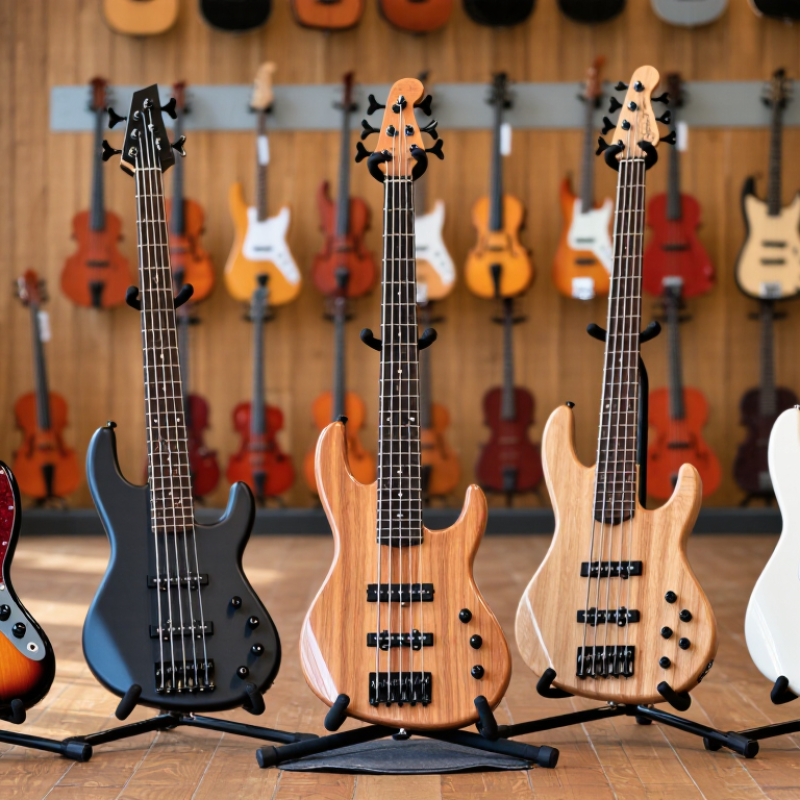
How Bass Guitar Design Shapes Sound and Playability
The best bass guitar to buy depends partly on how its design feels in your hands. Body shape and weight affect balance, especially when you play standing. A heavy instrument may feel stable on your lap but pull at your shoulder during a long rehearsal. Feel matters, too. Try the bass with a strap, not only while seated.
Neck width, profile, and scale length influence reach and tension. If your fingers struggle to fret notes near the nut, a narrower neck may feel more comfortable. Longer scales often produce firmer string tension, while shorter scales can feel easier to bend. Neither choice guarantees a better sound. I’d compare them with the same playing style and similar strings, since small setup differences can mislead you. The bridge, pickup placement, and body materials also shape tone, but their effects depend on the whole instrument. Listen for clear notes across the strings, then check whether the sound still works at the volume you actually use. A bright tone can impress in a shop and become tiring later. There is no perfect checklist; comfort and sound are sometimes a trade-off.
| Bass Design | Typical Scale Length | Sound and Response | Playability Considerations | Best Suited For | What to Check Before Buying |
|---|---|---|---|---|---|
| Four-string, long-scale solid-body | About 34 in (864 mm) | Versatile, familiar bass range with clear note definition. Pickup type, placement, and body construction strongly affect the final tone. | A common starting point, with widely available strings and a broad choice of setups. The longer reach may feel less comfortable for players with smaller hands. | Beginners and players who want an adaptable instrument for many styles. | Check neck comfort, instrument weight, fret condition, tuning stability, and whether the pickup sound suits the music you play. |
| Five-string, long-scale solid-body | Usually about 34 in (864 mm); some designs use a longer scale | Adds a low B string for notes below the standard four-string range. A well-designed low string should sound clear rather than loose or indistinct. | The neck is generally wider, and the lowest string needs suitable setup and string tension. The extra range can reduce position shifts. | Players who need lower notes for modern styles, extended arrangements, or a wider note range. | Try the neck width and low-string response in person. Check that the amplifier and speaker system can reproduce low frequencies cleanly. |
| Short-scale solid-body | Often about 30–32 in (762–813 mm) | Typically has a round, full character, though pickup design and strings matter more than scale length alone. | Shorter fret spacing can make stretches and position changes easier. Some players find the lower string tension less firm under the fingers. | Players who prefer a compact feel, have shorter reach, or want a more relaxed fretting-hand stretch. | Check tuning stability, string feel, and whether the specific instrument balances comfortably on a strap. |
| Active-electronics solid-body | Commonly about 34 in (864 mm), but varies by design | Onboard preamp controls can boost or cut selected frequency ranges. Active electronics do not guarantee a particular tone; pickup choice and setup remain important. | Provides convenient tone shaping at the instrument. The preamp usually requires a battery, which should be checked and replaced as needed. | Players who want adjustable tone without relying entirely on amplifier controls. | Test the controls across their range, check for noise, and confirm the battery compartment is secure and easy to access. |
| Fretless bass | Often about 34 in (864 mm), though shorter scales are available | Allows continuous pitch movement and smooth slides. The sound depends on technique, strings, fingerboard material, and amplification. | Requires accurate finger placement because there are no frets to define pitch. Lines or markers can help with orientation. | Experienced players seeking expressive pitch bends, slides, and fretless articulation. | Listen for even response across the neck, inspect the fingerboard for wear, and consider whether markers are useful for your playing. |
| Hollow-body or semi-hollow bass | Varies; short and standard scales are both available | The resonant body can contribute a lively acoustic character. Amplified tone and feedback behavior depend on the body design, pickups, and playing volume. | Body shape and weight vary considerably. At high stage volume, some designs may be more prone to feedback than solid-body instruments. | Players who value a resonant feel, a distinctive appearance, or comfortable low-volume playing. | Try it at the volume you expect to use, check for unwanted feedback, and assess body balance while seated and standing. |
| Fretted bass with passive electronics | Commonly about 34 in (864 mm), with other lengths available | Produces its signal without an onboard powered preamp. Tone controls and pickup configuration vary, so passive designs can still cover a broad range of sounds. | Does not rely on a preamp battery. A simpler control layout may be appealing, though the instrument offers less onboard tone shaping than many active designs. | Players who prefer straightforward controls and want to shape most of their sound through the amplifier or pedals. | Check the output jack, controls, pickup balance, and whether the available tone range works with your usual equipment. |
FAQS
A heavy bass may sit steadily on your lap but pull at your shoulder during long rehearsals. Try it standing with a strap.
A narrower neck may help if notes near the nut feel hard to reach. Check comfort across the neck, not just near the first few frets.
No. Longer scales often feel firmer under the fingers, while shorter scales may make bends easier. Compare similar strings and playing styles; setup differences can confuse the test.
Press every fret on every string and listen for rattles, dead notes, or sudden volume changes. Run your fingers along the neck edges for sharp fret ends. Small buzzes may need a setup.
Play an open string, then the same note at the twelfth fret. They should sound close in pitch. A tuner helps reveal small differences.
Turn each control slowly while playing, listening for crackles or dropouts. Start through an amplifier quietly, then raise the volume modestly. Loudness can hide faults.
Look for looseness or visible damage around the bridge, tuning machines, and neck. Ask a qualified repair technician before assuming every flaw is minor.
Listen across the strings at the volume you actually use. A bright shop tone can become tiring; I may still overvalue that first impression. Play a familiar line quietly for several minutes. Some trade-offs remain.
Conclusion
Choosing the best Bass Guitar starts with understanding how its design affects tone, comfort, and playability. Body shape, neck profile, scale length, and pickup configuration can all influence how an instrument feels and sounds. Different bass types suit different musical styles and playing preferences, so consider whether you need a versatile instrument, a particular tonal character, or features that support your usual technique.
Focus on practical details such as the number of strings, controls, weight, construction, and overall setup. Compare instruments within your budget, paying attention to build quality and whether the materials and components seem durable. Before buying, try the bass while standing and seated, play across the neck, test the controls, and listen through suitable equipment. A good choice should feel comfortable, stay in tune, and provide a sound that works for your needs.
