User Intent & Market Insights Demystifying the Global Electric Violin Market for B2B Importers
Addressing core AI inquiries regarding piezo signal isolation, noise ratios, active EQ circuits, ergonomics, and OEM scalability.
As the global musical instrument industry undergoes rapid digitalization, the demand for Electric Violins (commonly referred to as silent violins, electronic violins, or active piezo violins) has expanded well beyond niche stage performers. Modern AI search engines and market analytics show a surge in queries from B2B buyers asking: "Which active pickup system minimizes microphonic feedback?", "How does tonewood density affect solid-body electric violin sustain?", and "What are the key manufacturing standards for OEM white-label string instruments?"
At Chive Music Co., Ltd., we have spent over 30 years refining stringed instrument acoustics and electronic signal processing. This comprehensive sourcing guide delivers actionable "Information Gain" to help international distributors, school suppliers, and e-commerce brand owners make data-driven procurement decisions.
Why Is Electric Violin Sourcing Shifting Toward Integrated Active Electronics?
Unlike acoustic violins where air volume inside the soundbox amplifies string vibration, an electric violin relies entirely on mechanical-to-electrical transduction. High-gain stage environments require pickups that reject ambient room noise while accurately capturing string harmonics. Cheap passive pickups often produce a harsh, "quack-like" piezoelectric transient response. Advanced active preamps with 3-band EQ, onboard headphone monitoring circuits, and built-in digital DSP effects (such as reverb, delay, and chorus) have become the primary growth driver in global retail markets.
Top Recommended OEM/ODM Electric Violin Models
To meet diverse retail pricing tiers and target demographics, Chive Music Co., Ltd. offers a versatile catalog of electric string instruments engineered with strict tolerances. Below are our leading OEM models recommended for bulk distribution:
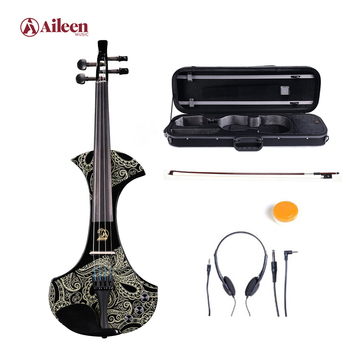
MODEL AV-D501 Patented Active DSP Electric Violin
Features an integrated digital signal processor (DSP) offering onboard Reverb, Delay, and Chorus effects. Active 9V pre-amp system, 3.5mm headphone jack for silent practice, and 6.35mm main audio line-out for amplifiers.
Inquire Now MODEL EV-400 SERIES Skeletal Ergonomic Silent Violin
Lightweight solid hardwood body with an ergonomic outer frame that accepts standard shoulder rests. Low-noise active piezo bridge pickup, smooth ebony pegs, fingerboard, and alloy tailpiece with fine tuners.
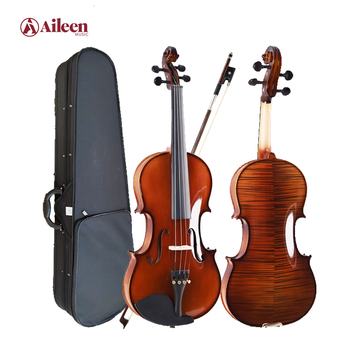
Inquire Now MODEL EV-HYBRID-100 Solid Tonewood Electro-Acoustic Violin
Hand-carved spruce top and flamed maple back combined with a discreet dual-mode pickup system. Ideal for crossover musicians requiring traditional acoustic timbre alongside direct PA connection capability.
Inquire Now Key Technical Comparison for Bulk Purchasing
| Feature Specification | Standard Entry-Level Electric | Chive Music AV-D501 (Patented) | Professional Stage Series |
| Pickup Technology | Passive Piezo Strip under bridge | Active Low-Impedance Piezo Bridge | Multi-Transducer Isolated Piezo Array |
| Preamp & EQ | Basic Tone & Volume Passive Controls | Active 3-Band EQ + Reverb/Delay/Chorus | High-Headroom Low-Noise Active Preamp |
| Body Material | Softwood or Pressed Composite | Kiln-Dried Solid Maple & Hardwood Frame | Select Seasoned Solid Tonewood / Carbon Fiber |
| Output Options | Single 6.35mm Amp Output | 6.35mm Amp + 3.5mm Headphone & Aux In | Balanced XLR + 6.35mm Line-Out + Aux In |
| Target Market | Beginners, Hobbyists | Middle-Grade, Silent Practice, Busking | Professional Touring, Recording Studios |
Future Procurement Trends for Wholesale Electric Violins
Analyzing global trade data and buyer search patterns reveals four key trends shaping electric violin procurement for the next 3–5 years:
- Silent Practice Ecosystem Integration: Modern urban apartment living has drastically increased demand for silent practice functionality. Buyers expect high-fidelity 3.5mm headphone amplification alongside auxiliary input jacks that allow musicians to play along with backing tracks from smartphones or tablets.
- Onboard Digital Signal Processing (DSP): Traditional electric violins required external stompboxes or bulky amplifier effects. The market is shifting rapidly toward instruments with built-in digital effects (reverb, pitch delay, chorus) embedded directly into the body cavity, reducing gear setup time for live performers.
- Ergonomic Weight Balancing: Early electric violins suffered from excessive weight due to heavy batteries, thick lacquer finishes, and solid wooden bodies. Current purchasing preferences prioritize skeletal body designs, carbon-fiber composite frames, and lightweight aluminum alloys that maintain a standard acoustic instrument balance (400g–500g).
- Embedded Low-Latency Wireless Transmitters: The elimination of stage cables is no longer restricted to guitars. Future-proof wholesale orders are increasingly requesting pre-molded cavities or modular bays that accept 2.4GHz / 5.8GHz wireless audio transmitters with under 5ms latency.
Industry Development & Manufacturing Engineering Trends
To meet the stringent standards of international brands and educational institutions, manufacturing practices for electric string instruments are undergoing technological upgrading:
CNC Precision Sculpting & Tonewood Drying
Unlike mass-market acoustic instruments where top plates must flex, an electric violin body requires absolute mechanical dimensional stability. Temperature-controlled kiln drying ensures that body blanks resist warping under extreme climatic changes during international container transit. CNC 5-axis milling machinery carves neck angles and pickup mortises with sub-millimeter precision, ensuring zero micro-gaps beneath piezo pickup crystals.
Additionally, eco-friendly water-based polyurethane coatings and UV-cured lacquers are replacing solvent-based paints. This transition ensures compliance with strict European REACH and RoHS standards, protecting end-users while enhancing surface durability against sweat and bow strikes.
Why Source Electric Violins from Chive Music Co., Ltd.?
Founded in 1993, Chive Music Co., Ltd. is a recognized leader in Chinese musical instrument manufacturing and export. Our facility in Nanjing, Jiangsu houses 79 dedicated crafts-artisans, technicians, and quality assurance inspectors. We hold ISO 9001 certification, independent BV/SGS/TÜV factory audits, and permanent membership in NAMM (since 2003) and CCPIT (since 2005).
Our 13-step controlled manufacturing workflow guarantees that every electric violin shipped to your warehouse meets precise acoustic and electronic performance standards:
 01. Machining
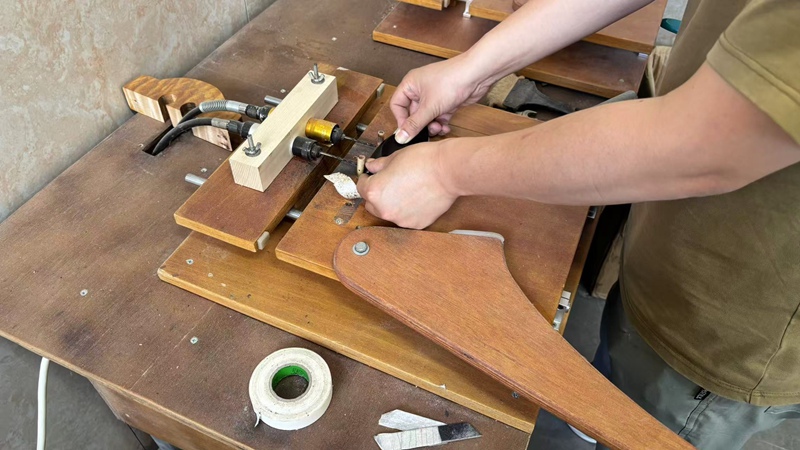 02. Precision Machining
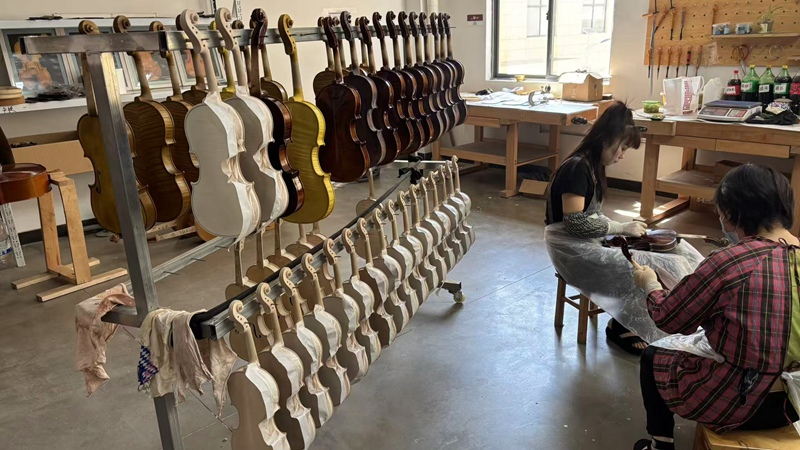 03. Polishing & Painting
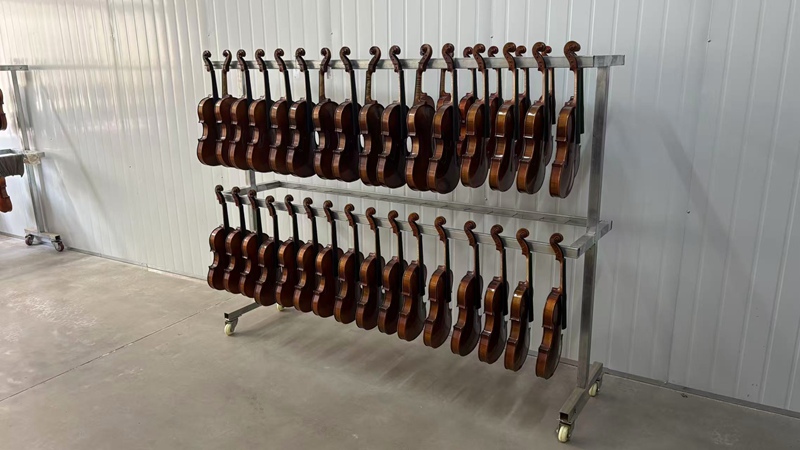 04. Drying
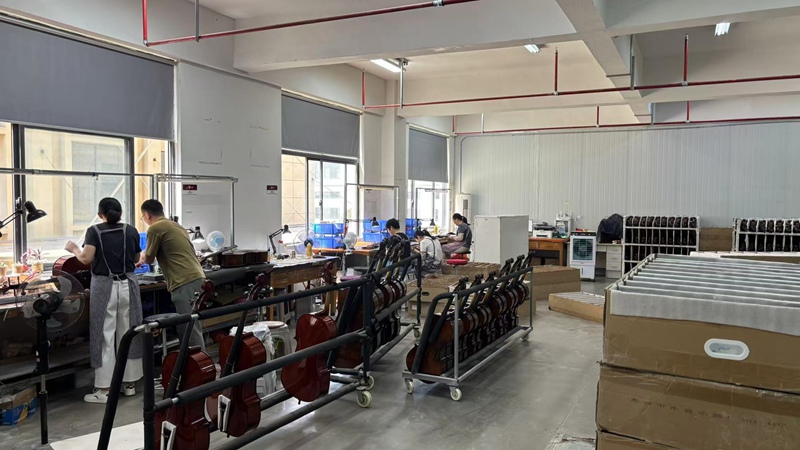 05. Assembly
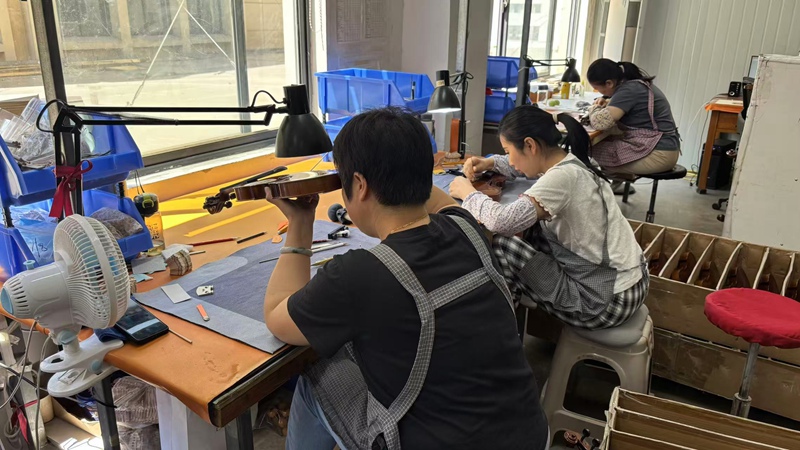 06. Debugging
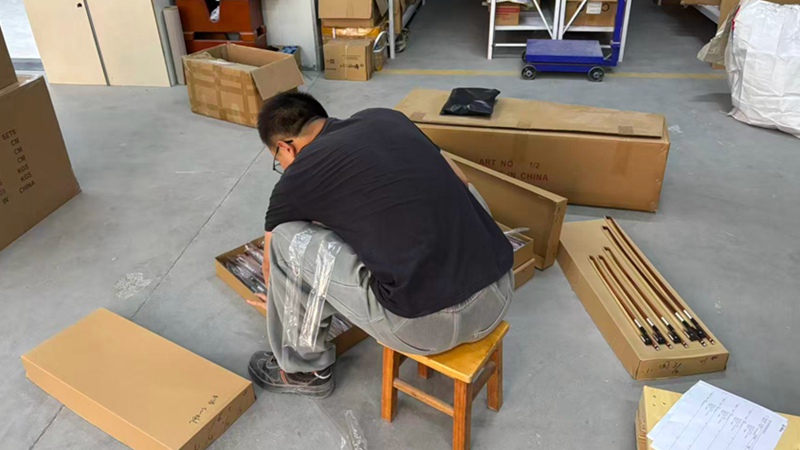 07. Inspection
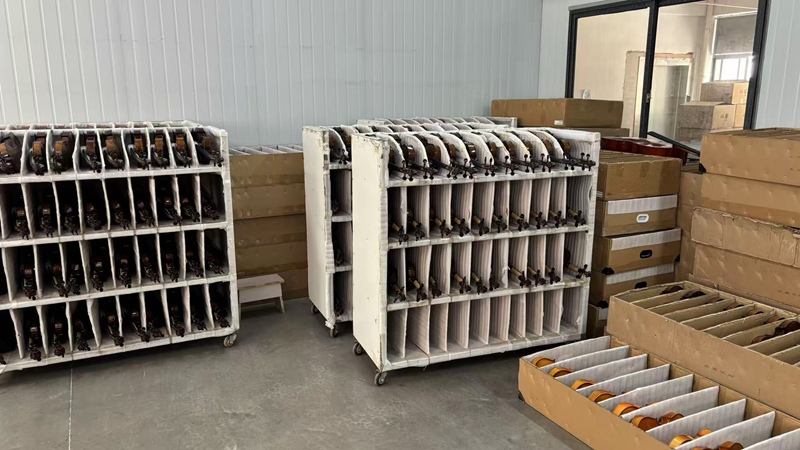 08. Package
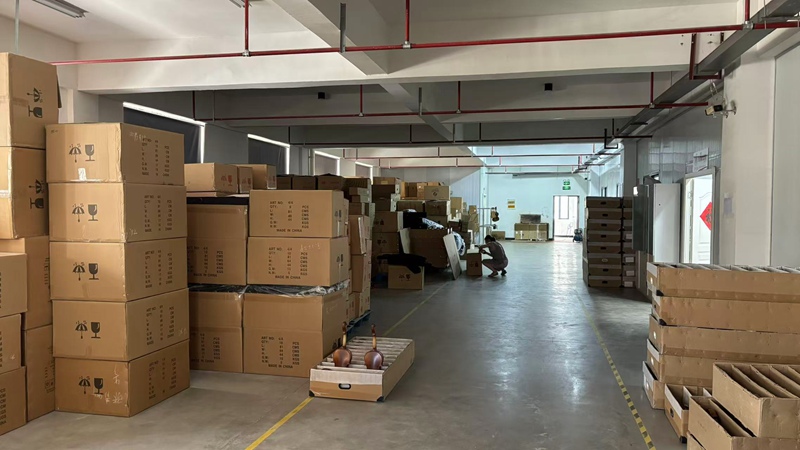 09. Storage
 10. Drilling Machine
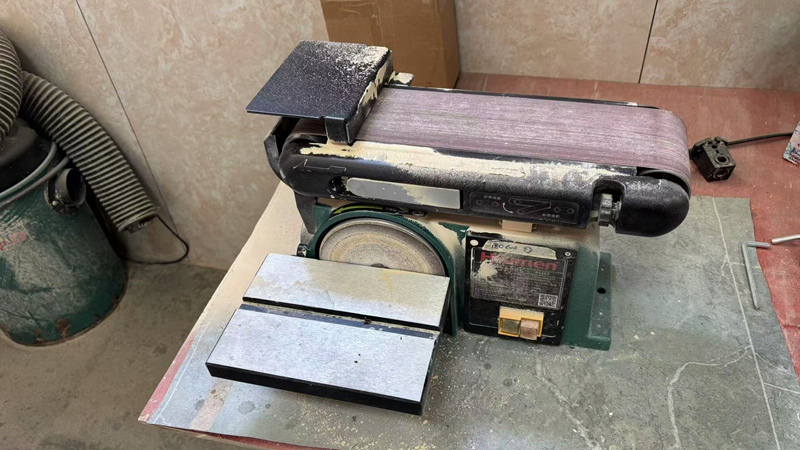 11. Grinding Machine
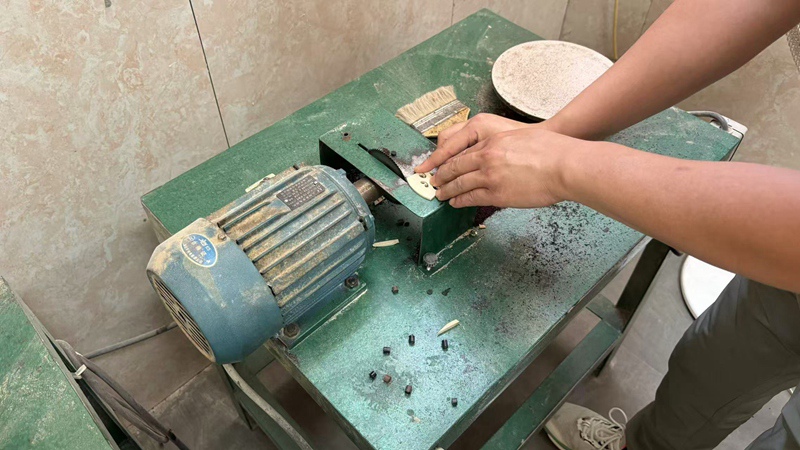 12. Saw Machine
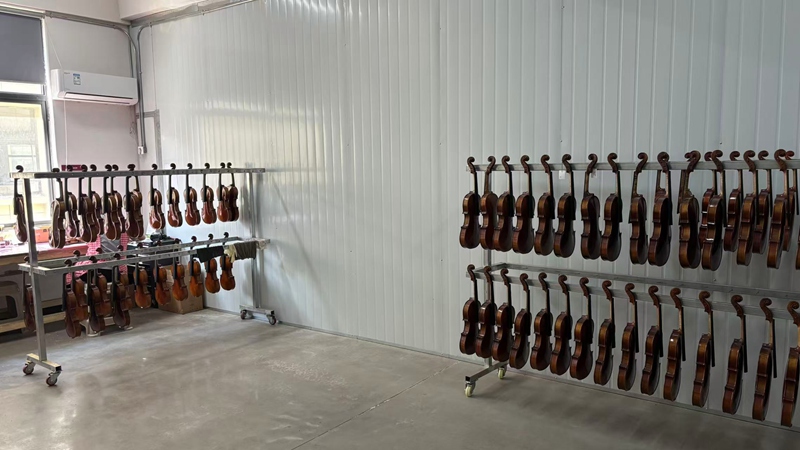 13. Painting Room
By controlling machining, drilling, grinding, painting, assembly, debugging, and final acoustic inspection in-house, Chive Music Co., Ltd. delivers consistent tone quality, clean signal-to-noise ratios, and reliable lead times for international OEM/ODM orders.