0%

Choosing an Acoustic Electric Guitar manufacturer in China involves more than comparing price lists. The market includes established instrument brands, specialist workshops, and OEM factories serving different budgets and production needs. Their capabilities can vary widely, even when product photos look similar.

A useful comparison begins with the instrument itself. Check the top wood, body construction, neck joint, fret finishing, and pickup system. Ask whether specifications remain consistent across production batches, and request clear details about materials and quality checks. A clean sample matters. So does repeatability.

For example, inspect the fret ends, listen for unwanted rattles, and test the onboard preamp through an amplifier. These small checks can reveal issues that a catalog description will not. Ask about sample lead times, customization limits, packaging, and communication after an order is placed. Reliable answers are specific, not just reassuring.

This guide looks at manufacturers through practical criteria: product range, production experience, build quality, customization, and support. It does not treat a low quote or impressive showroom as proof of quality. A polished sample is not enough. Buyers should compare the same specifications and, where possible, evaluate a physical instrument before committing to a larger order. Even careful research has limits; factory capabilities and product details can change, so confirm current information directly with each manufacturer.
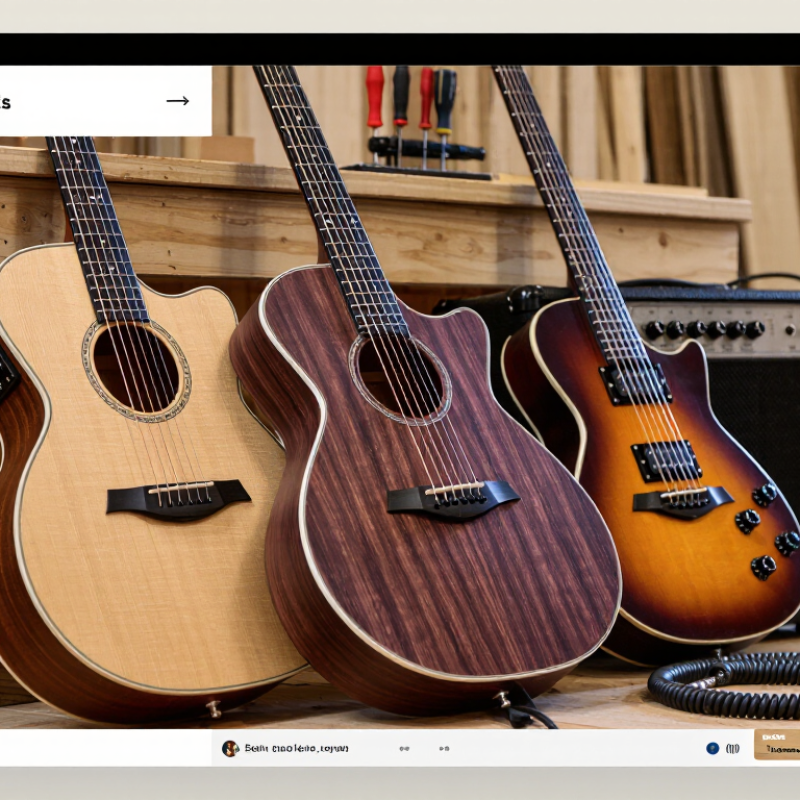
Top Acoustic Electric Guitar Manufacturers in China?

Acoustic-Electric Guitars: Design and Core Components

Acoustic-Electric Guitars: Design and Core Components

A well-made acoustic-electric guitar must sound natural unplugged and remain clear through an amplifier. Its soundboard, often spruce or cedar, responds to string vibration. Internal bracing supports the top while shaping its movement. Too much stiffness can reduce resonance; too little may affect durability. Small details matter. Neck alignment, fret finishing, and a stable bridge all influence playability. In production, these parts need consistent fitting, not just attractive materials.

Tips: Test the guitar both unplugged and amplified. Listen for uneven volume across strings, and check that the controls turn smoothly. A quick test can reveal issues, though room acoustics may color what you hear.

The pickup and preamp translate string vibration into an electrical signal. Under-saddle pickups are common, while soundhole sensors offer another approach. A built-in preamp usually provides volume and tone controls; some include a tuner. Check the output jack for a firm fit and listen for hum or crackling when the cable moves. These checks do not guarantee long-term reliability, but they help buyers assess basic assembly. For manufacturers in China, careful component matching and final inspection can make the difference between a guitar that merely works and one that feels dependable onstage.

China’s Role in the Acoustic-Electric Guitar Industry

China’s role in the acoustic-electric guitar industry is built on manufacturing depth, not just output volume. Grand View Research’s 2024 guitar-market report estimated the global market at USD 11.9 billion in 2023 and projected 7.3% annual growth through 2030. That figure describes worldwide demand, not China’s share. Still, it points to a market where reliable production and consistent quality matter.

Chinese factories support many stages of production, including body shaping, neck fitting, pickup installation, finishing, and final inspection. UN Comtrade tracks exports under HS 920290, a category covering other string instruments. It does not isolate acoustic-electric guitars, so its trade figures cannot provide a precise China-only guitar total. Important distinction. For buyers, the details matter: a clean sunburst finish looks good under showroom lights, but fret leveling, stable tuning, and quiet electronics reveal more about everyday quality. A reflective point: production scale can improve consistency, but it does not guarantee it. Samples and batch checks still deserve close attention.

Profiles of Notable Chinese Guitar Manufacturers

Chinese acoustic-electric guitar manufacturers range from large export-focused factories to smaller workshops with more flexible production. Their profiles often differ in scale, design control, and finishing methods. Some facilities combine CNC shaping with hand sanding, allowing consistent body dimensions while retaining room for adjustment. Details matter: check fret ends, bridge alignment, and the fit around the pickup system.

Many manufacturers build instruments for overseas distributors, so a product’s specifications may reflect a buyer’s brief rather than the factory’s own design. Ask whether the workshop controls wood selection, electronics installation, and final inspection. A clear answer is useful. So is a sample instrument. Play it unplugged, then test the pickup through an amplifier; a clear acoustic tone does not guarantee balanced amplified sound.

Factory capability can look impressive in a showroom, but repeatability is harder to judge. Request measurements from several instruments in one production run, including action and neck relief. Ask how humidity is managed during storage and shipping. Not every maker publishes this information, and that gap deserves attention. Profiles are most credible when they describe both strengths and limits, rather than relying on broad claims about craftsmanship.

Top Acoustic Electric Guitar Manufacturers in China? — Profiles of Notable Chinese Guitar Manufacturers

Standard tuning frequencies provide a shared acoustic reference for designing and testing acoustic-electric guitars. These measurements are not company or brand data.

Frequencies shown are the standard six-string tuning notes, from the lowest string (E2) to the highest (E4), in equal temperament.

Materials, Production Methods, and Quality Control

Materials, Production Methods, and Quality Control

Reliable acoustic-electric guitars begin with stable, traceable materials. Chinese workshops commonly select spruce or cedar for soundboards, with hardwoods for necks and backs. The USDA Forest Products Laboratory’s Wood Handbook (2021) places the fiber-saturation point near 30% moisture content for many wood species; below it, drying causes shrinkage.

Wood still moves.

Factories should acclimate stock, record moisture readings, and reject boards with checks or uneven grain. A digital meter helps, but readings vary with species and temperature, so operators need consistent procedures.

Production and Inspection

Production combines CNC routing with careful handwork. Machines can repeat body shapes and neck profiles; workers still inspect brace fit, glue lines, and fret ends. Small details matter.

Quality checks should track neck relief, action, intonation, and output from the undersaddle pickup. Test each instrument after it settles, not just at the assembly bench. A humidified room and documented calibration reduce variation, while sample-based audits can catch recurring defects.

Yet a perfect checklist cannot replace listening: a guitar may meet dimensional targets and still sound unbalanced. That gap deserves honest review, not a rushed pass.

How to Compare Chinese Acoustic-Electric Guitar Makers

When comparing Chinese acoustic-electric guitar makers, look beyond catalog photos and quoted prices. Ask how they control neck relief, fret leveling, and bridge placement across repeated production runs. Request details on top wood, bracing, scale length, and pickup systems. Compare physical samples, not just a showroom instrument.

One guitar can impress. Consistency is harder.

Play each sample unplugged, then through the same amplifier at similar settings. Listen for a balanced response across the strings, and check whether the onboard controls are easy to use without unwanted noise. Small details matter. Inspect fret ends, finish around the neck joint, and tuner movement. A specification sheet can still flatter a guitar; hands-on testing may tell a different story.

Ask for clear information about inspection steps, setup before shipment, and how defects are handled. Request photos or records from production checks, but treat them as supporting evidence, not proof of every instrument’s quality. Compare lead times, customization limits, communication, and access to replacement parts. A small pilot order can reveal more than a long sales call. It takes extra time, and even a careful comparison cannot remove every uncertainty.

FAQS

Which woods are commonly used for acoustic-electric guitars?

Spruce or cedar often forms the soundboard. Hardwoods are commonly used for necks and backs.

Why should workshops measure wood moisture?

Wood shrinks as it dries below its fiber-saturation point, which is near 30% for many species. Readings can vary. Consistent procedures help.

What should workers inspect during production?

They should check brace fit, glue lines, and fret ends. CNC machines repeat shapes, but careful handwork still matters.

Which setup details should be checked before shipment?

Check neck relief, string action, intonation, and pickup output. Testing after the guitar settles may reveal changes missed at the assembly bench.

How can I compare two sample guitars fairly?

Play both unplugged, then through the same amplifier at similar settings. Listen across all strings. One guitar can impress.

What physical details deserve close attention?

Inspect fret ends, finish around the neck joint, and tuner movement. Also try the onboard controls and listen for unwanted noise.

Are inspection records enough to prove consistent quality?

No. Photos and records support a review, but they cannot prove every guitar is consistent. Ask how defects are handled.

What can a small pilot order reveal?

It can show how communication, lead times, customization, and replacement-part access work in practice. Still, some uncertainty remains.

Conclusion

This article explores how an Acoustic Electric Guitar combines the resonant body of an acoustic instrument with built-in electronics for amplified performance. It outlines the roles of the soundboard, body, neck, pickups, preamps, and controls, and explains how their design affects tone, comfort, and reliability. It also considers China’s place in the industry, where established manufacturing capabilities and varied production scales support a wide range of instruments for different budgets and playing needs.

The article profiles notable Chinese manufacturers without focusing on brand promotion, then examines how wood selection, alternative materials, construction methods, finishing, and quality checks influence consistency and sound. Finally, it offers practical ways to compare makers, including evaluating materials, workmanship, electronics, playability, production standards, and after-sales support. These factors can help buyers and sourcing professionals make informed comparisons based on intended use, preferred sound, and overall value.

Evelyn Caldwell

Evelyn Caldwell

Evelyn Caldwell is a professional marketing specialist with a strong understanding of the company’s products, services, and the needs they are designed to address. She regularly contributes expert articles to the company website, sharing clear, practical information that helps readers understand......