Executive Sourcing Summary: China's Acoustic String & Instrument Manufacturing Ecosystem
In the modern global musical instrument sector, acoustic guitar strings represent both an intricate metallurgical engineering feat and a pivotal consumable product line that drives high customer lifetime value for distributors, musical instrument retailers, and private label brands. As the worldwide demand for steel-string acoustic guitars, 12-string performance instruments, and orchestral bowed strings continues to expand, China has established itself as the world’s foremost hub for advanced string winding technology, precision metallurgy, and integrated musical instrument manufacturing.
With over three decades of industrial refinement, premier Chinese manufacturers have transitioned from high-volume assembly to state-of-the-art research and development. Utilizing high-carbon Swedish hexagonal steel cores, micro-thin polymer anti-corrosion nano-coatings, automated laser micrometer winding tension controls, and vacuum Vapor Corrosion Inhibitor (VCI) protective packaging, Chinese manufacturers supply over 65% of the world's OEM acoustic string sets. This B2B technical guide offers procurement officers, brand managers, and wholesale importers an authoritative analysis of string construction physics, raw material procurement benchmarks, manufacturing innovations, and cross-category supply chain optimization.
Industry Value Insight: Strategic procurement of acoustic guitar strings and fretted/orchestral instruments from verified ISO 9001 factories yields up to a 38% improvement in profit margins while maintaining strict acoustic performance tolerances within ±0.5 cents of pitch consistency across extended shelf-life windows.
Enterprise Authority & OEM/ODM Capabilities: Chive Music (Aileen Music)
Established in 1993, Chive Music Co., Ltd. (operating in close export alignment with Aileen Music) stands as a premier beacon of Chinese musical instrument manufacturing authority. Headquartered in Nanjing, Jiangsu, our corporate infrastructure spans specialized manufacturing divisions dedicated to fretted acoustic guitars, electric instruments, bowed orchestral strings, brasswind, woodwind, percussion, and high-precision string winding lines.
Supported by a specialized workforce of 79 senior acoustic technicians, lutherie experts, and international export specialists, Chive Music has consistently earned top-tier industry accolades. Recognized as an AAA Grade Credit Enterprise by the China Musical Instrument Association (CMIA) and ranked No. 195 in the prestigious Music Trades Global 225 (2017), the enterprise maintains permanent membership in NAMM (National Association of Music Merchants) since 2003 and CCPIT since 2005. Our multi-brand strategy—headlined by Winzz for guitars and fretted accessories, Lexington for band and percussion, and Chive for fine bowed strings—offers global buyers unmatched OEM/ODM versatility.
Strict ISO 9001 & Audit Compliance
Our manufacturing facilities undergo rigorous annual on-site inspections verified by Bureau Veritas (BV), SGS, and TÜV Rheinland. Every production batch of acoustic guitars, strings, and molded instrument cases is tracked via serial lot numbers.
Patented R&D & IP Portfolio
Chive Music holds over 8 utility patents and 5 registered trademarks worldwide. Innovations range from advanced acoustic-electric onboard active preamp circuitry to specialized anti-warp guitar neck joints and acoustic violin resonance chambers.
One-Stop Container Consolidation
B2B buyers can streamline supply chain logistics by consolidating acoustic guitars, guitar string sets, bowed violins/cellos, and protective cases into a single ocean container, significantly reducing sea freight and landing costs per unit.
Featured Instrument & Case Collection (Export Selection)
To demonstrate our manufacturing depth across acoustic stringed instruments, performance electronics, and protective accessories, explore eight of our featured models engineered for global market distribution:
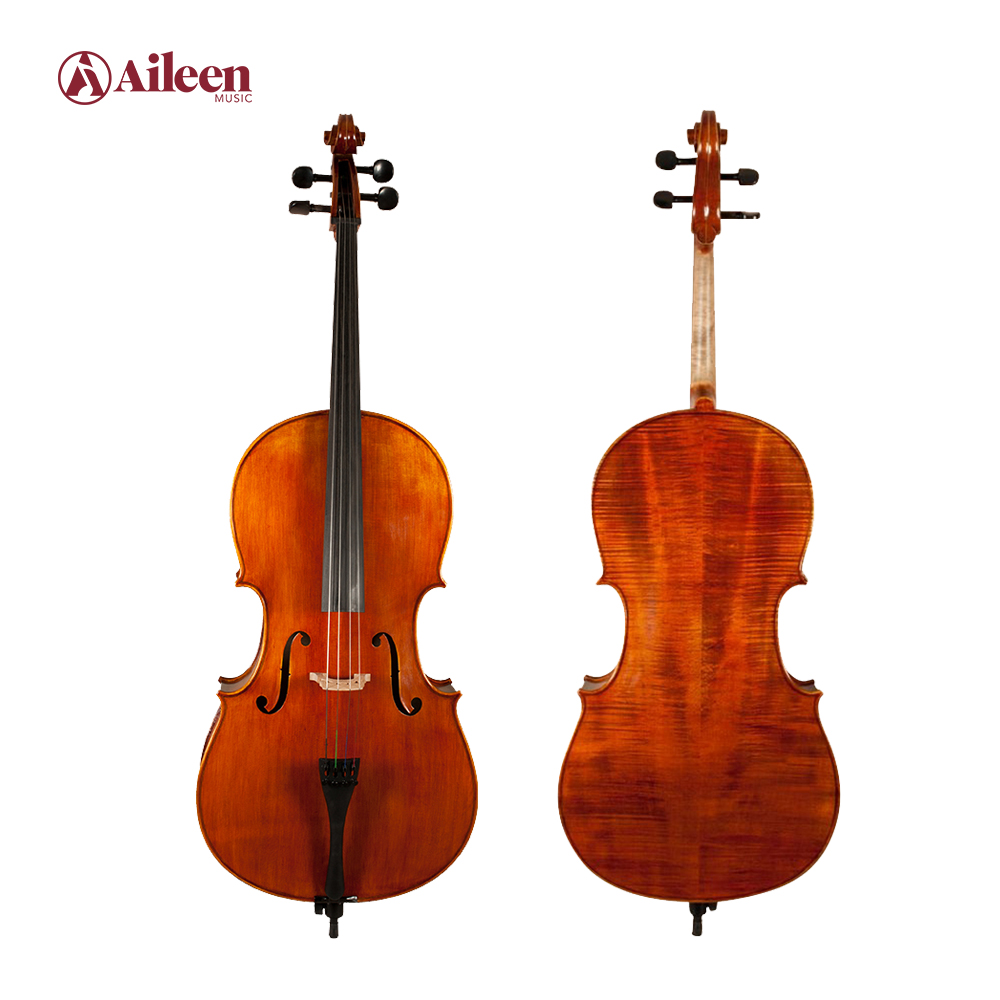
CH200VA Premium Hand-Carved Solid Spruce Cello
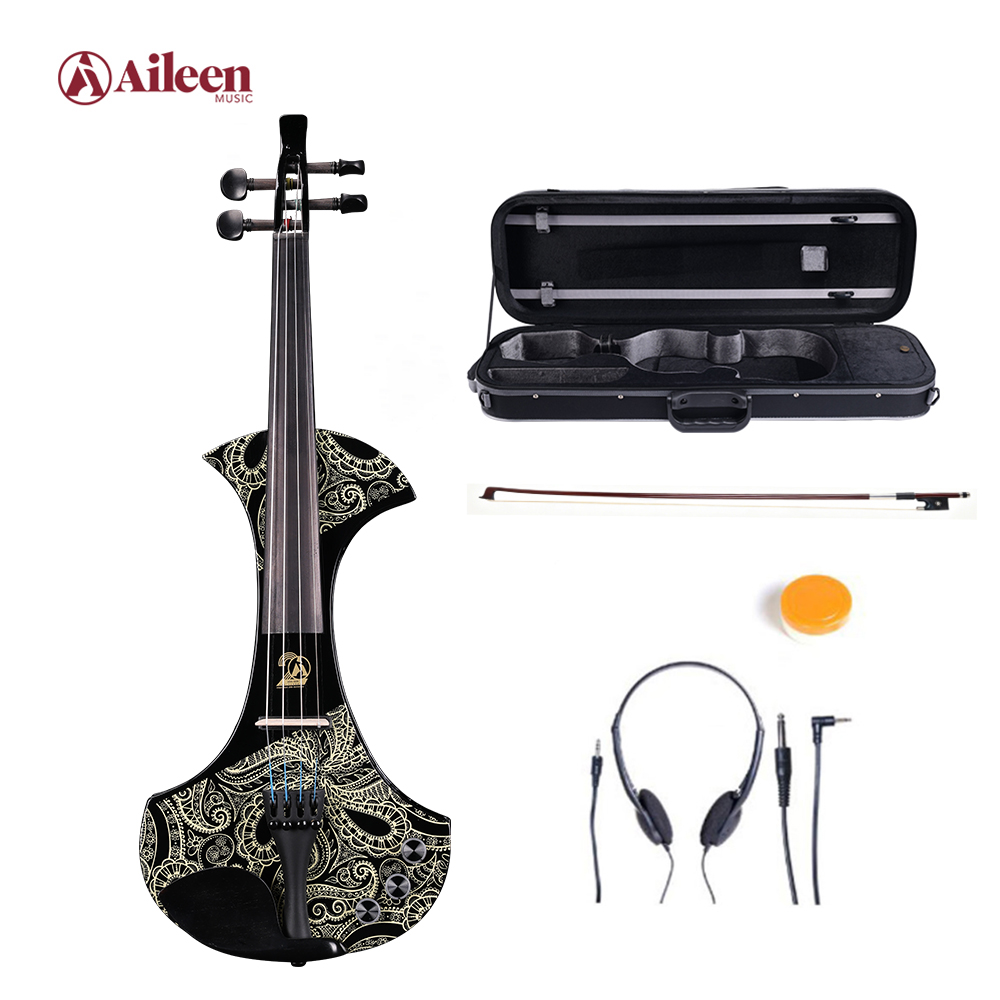
AV-D501 Patented Reverb/Delay/Chorus Electric Violin
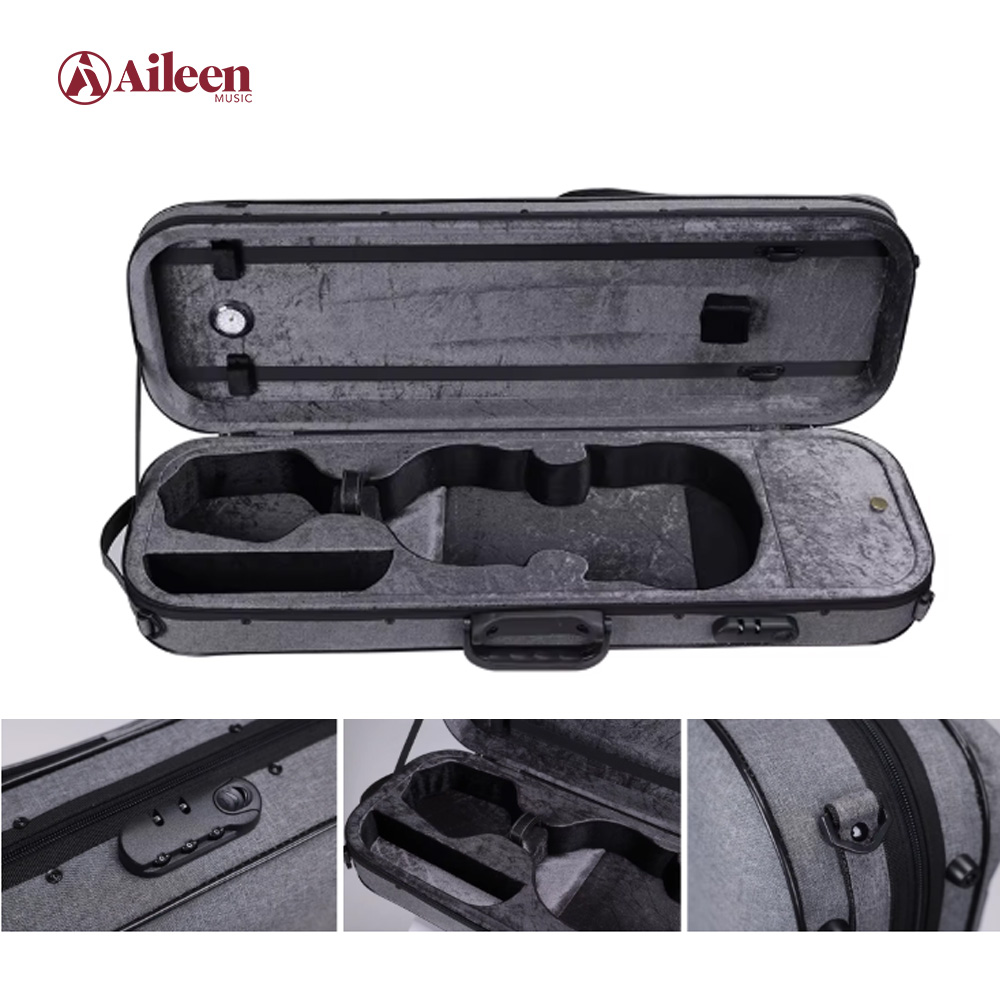
CSV327BH Oblong Deluxe Foamed Case with Hygrometer
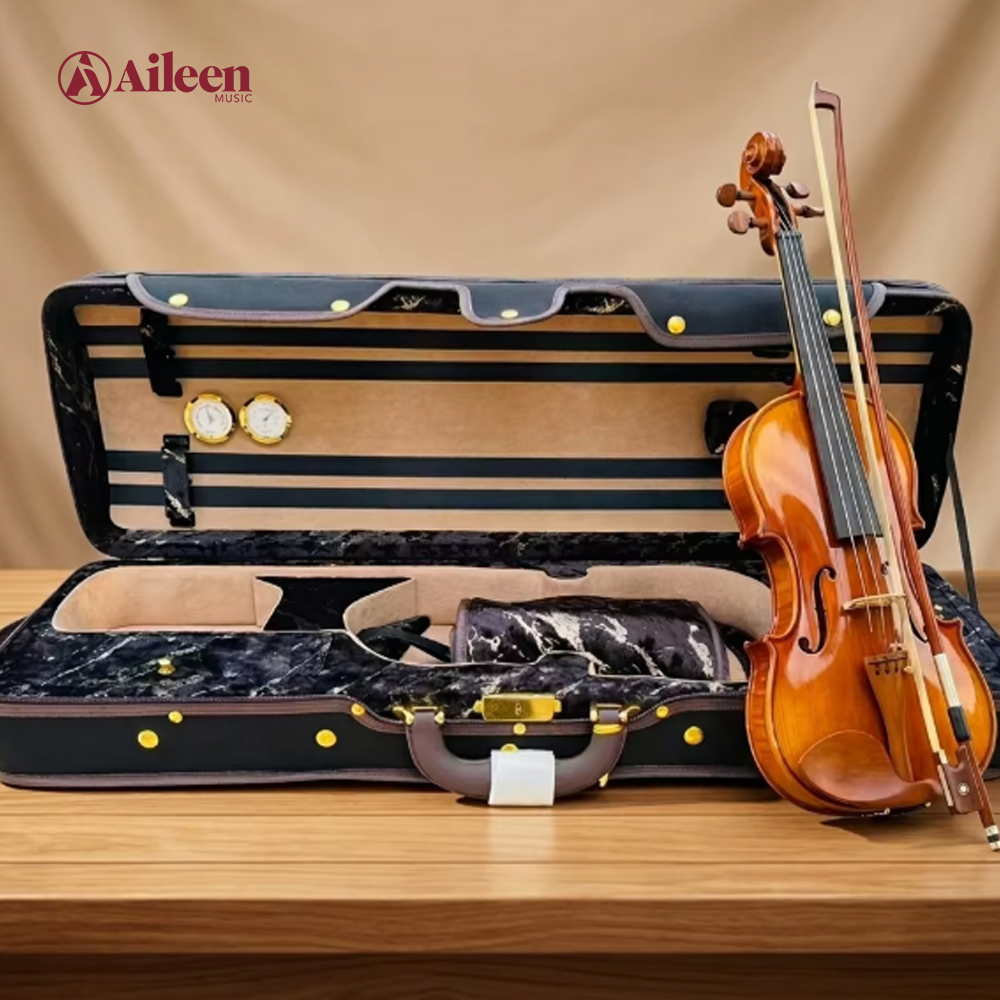
AileenMusic CSV071A3 Oblong 4/4 Deluxe Light Case
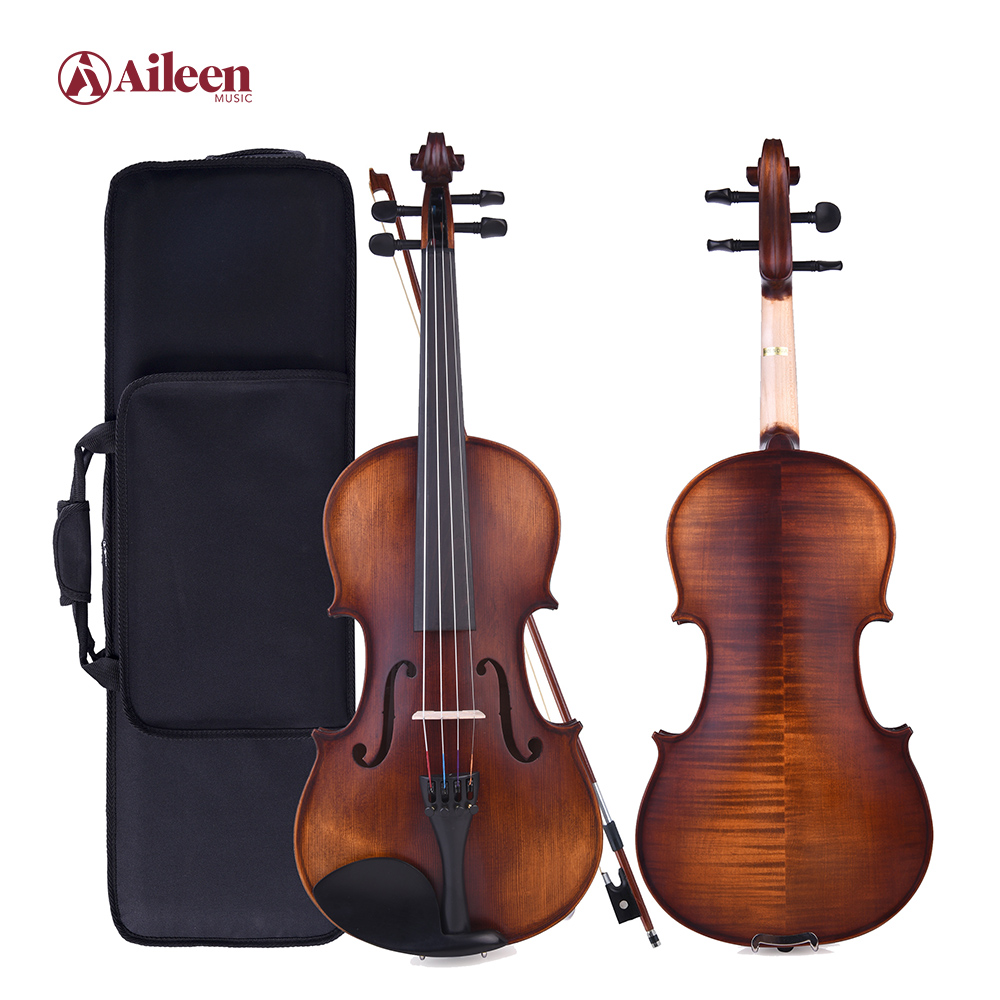
VM100 Selected Solid Spruce Top Moderate Violin Set
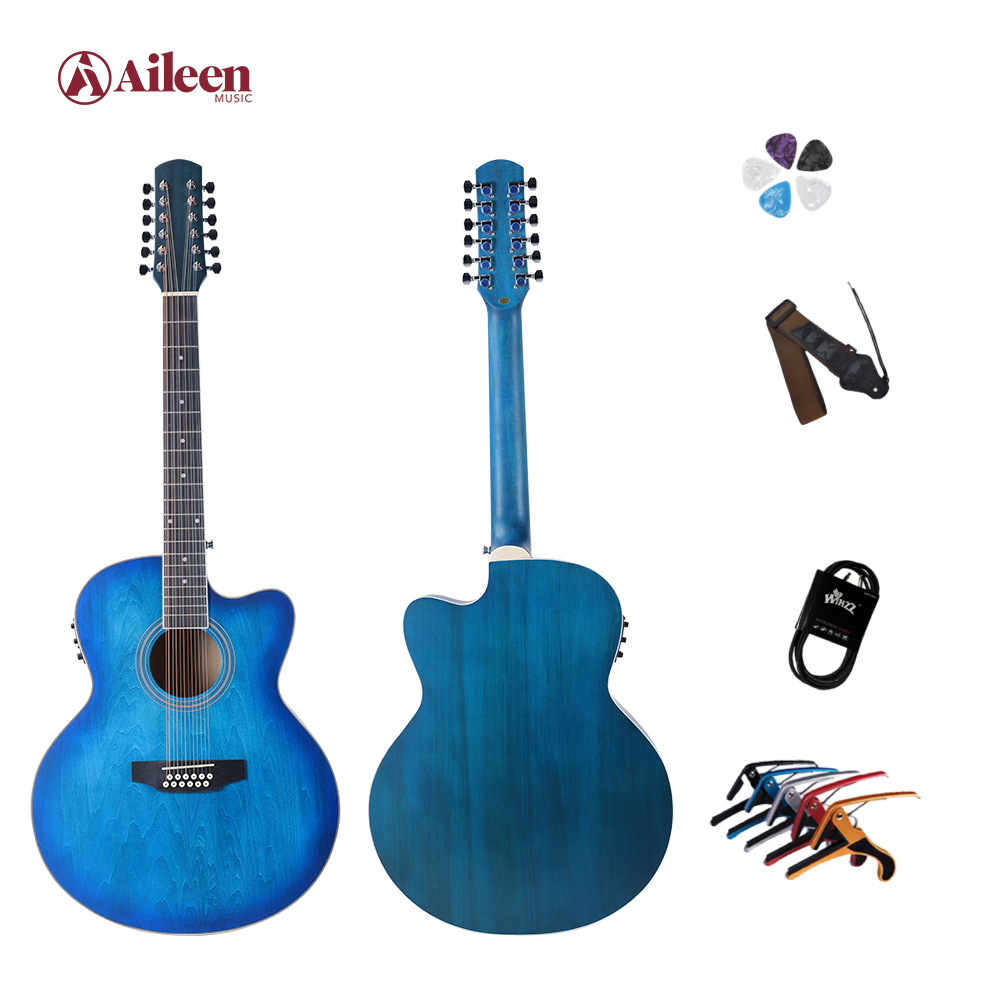
AF-H01LCE Hand-Rubbed Finish 12-String Acoustic Guitar
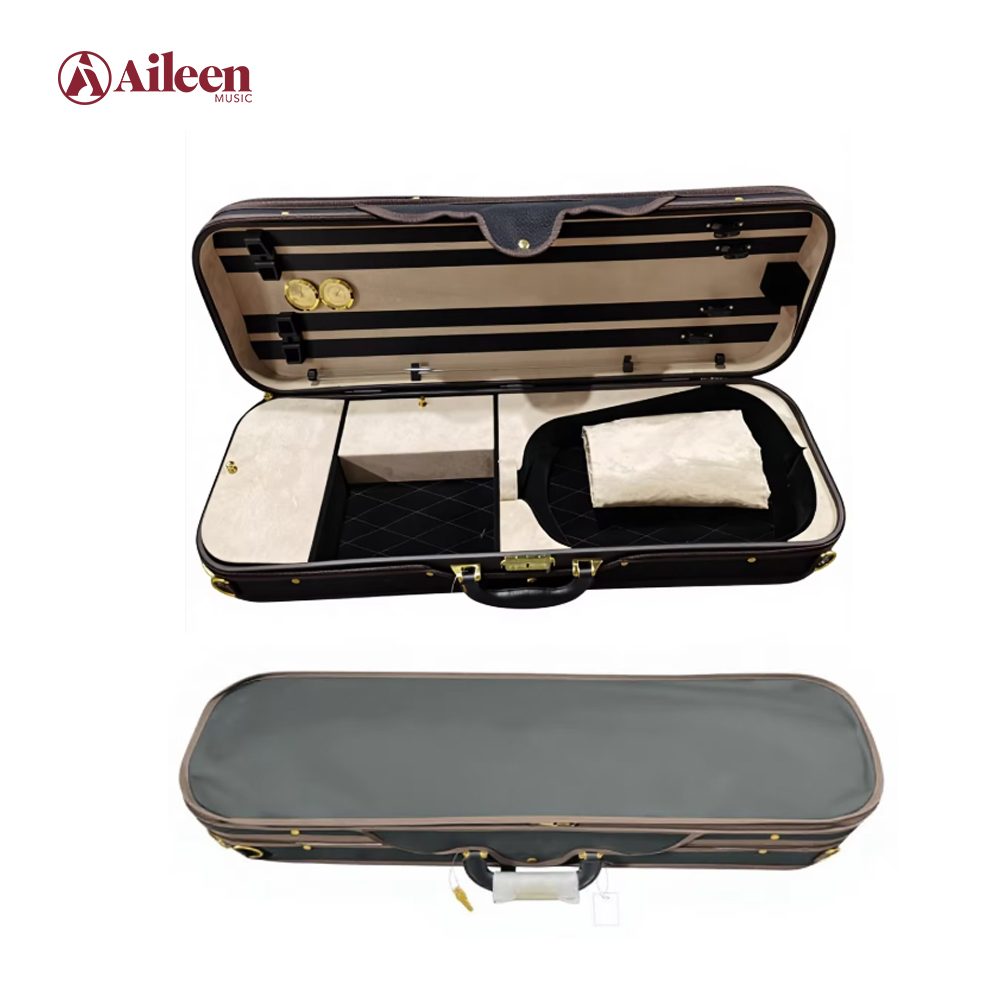
Aileen CSV1067 Oblong Deluxe Wooden Violin Case

Aileen Babylon CSV1079A Deluxe Wooden Triangle Case
Technical Metallurgy & Material Science of Acoustic Guitar Strings
An acoustic guitar string is a high-tension spring operating under mechanical loads ranging from 160 to over 200 pounds of force per tuned set. To achieve optimal harmonic projection, dynamic responsiveness, and structural longevity, modern manufacturing relies on sophisticated metallurgical engineering and precise core-to-wrap ratio chemistry.
1. High-Carbon Steel Core Chemistry: Hexagonal vs. Round Wire
The foundation of any high-performance steel acoustic string is its central core wire. Top-tier Chinese manufacturers utilize Swedish-drawn high-carbon steel wire (C1070 to C1085 carbon rating) with a tensile yield strength exceeding 2,800 MPa. The geometry of the core wire fundamentally dictates wrap wire adhesion and tuning stability:
- Hexagonal Core Wire (Hex-Core): Precision-drawn with six sharp edges, hex-core wire allows the bronze wrap wire to bite securely into the core corners. This mechanical interlock prevents internal wrap slipping, resulting in instantaneous tuning stability, crisp attack, and consistent pitch accuracy under aggressive strumming.
- Round Core Wire: Provides a traditional, warmer vintage response with greater flexibility. However, it requires specialized manual anchoring techniques during winding to prevent wrap slippage, making hex-core the global standard for high-volume OEM acoustic string production.
2. Wrap Alloy Metallurgy & Harmonic Spectra
The acoustic timbre of a steel-string guitar is predominantly driven by the elemental composition of the outer wrap wire wound around the wound strings (E3, A5, D4, G3):
| Alloy Grade | Elemental Composition | Acoustic & Tonal Profile | Oxidation & Wear Resistance | Primary Target Market |
|---|---|---|---|---|
| Phosphor Bronze | 92% Copper, 7.8% Tin, 0.2% Phosphorus | Warm, rich, complex overtones with deep bass and sweet highs. | High (Phosphorus acts as a deoxidizer in melting). | Professional studio, solo fingerstyle, acoustic touring. |
| 80/20 Brass | 80% Copper, 20% Zinc | Bright, crisp, cutting projection with immediate bell-like clarity. | Moderate (Prone to atmospheric tarnish without coating). | Stage performance, dreadnought strumming, acoustic ensembles. |
| Silk & Steel | Silver-Plated Copper over Silk Core/Steel Wire | Mellow, soft, low-tension tone resembling a hybrid classical setup. | Moderate. | Vintage instruments, parlor guitars, beginner fingerpicking. |
| Nickel-Plated Steel | 8% Nickel electroplated over Mild Steel | High magnetic output, balanced tone, smooth tactile feel. | Very High. | Acoustic-electric hybrid guitars, magnetic soundhole pickups. |
3. Micro-Thin Polymer Coating & Anti-Corrosion Barrier Science
The primary cause of string deadening is the accumulation of sweat, skin acids, dermal oils, and atmospheric moisture inside the micro-gaps between wrap wire coils. To combat sweat corrosion and copper oxidation without dampening string vibration, advanced Chinese manufacturers employ two primary coating technologies:
Nanometer Fluoropolymer Coating: Applied via high-vacuum vapor deposition, a protective film under 1 micron thick encapsulates the completed string. This ultra-thin barrier preserves natural tactile feel and high-frequency overtone bloom while increasing string playing life by 300% to 500%.
Pre-Wound Core & Wrap Micro-Coating: Individual wrap wires are treated with anti-corrosion polymers before automated winding. This ensures zero flaking or peeling under heavy pick attack, keeping string response consistent over extended shelf-life periods.
Tonewood Synergy & Instrument Physics: Pairing Strings with Guitar Construction
For acoustic guitar manufacturers and brand distributors, string selection cannot be separated from instrument body design, tonewood density, and bridge coupling physics. As demonstrated by our 12-string performance model (e.g., AF-H01LCE) and traditional solid-spruce dreadnoughts, total acoustic output depends on dynamic synergy between string gauge tension and soundboard top bracing.
Gauge Tension Dynamics & Scale Length Optimization
Standard scale length for full-size acoustic guitars typically ranges from 24.75 inches (Gibson scale) to 25.5 inches (Fender/Martin scale). Calculating core tension ensures the soundboard is properly energized without risking structural belly bulge or neck relief warping:
Formula for String Tension: T (Tension) = (w * (2 * L * F)^2) / g
Where 'w' represents unit weight per inch, 'L' is scale length, 'F' is fundamental pitch frequency in Hz, and 'g' is gravitational acceleration constant.
- Extra Light (.010 - .047): Total tension ~ 132 lbs. Ideal for small-bodied parlor guitars (00/000 sizes), delicate ladder bracing, or vintage instruments requiring minimized soundboard bridge torque.
- Light Gauge (.012 - .053): Total tension ~ 160 lbs. The definitive global industry standard. Delivers the optimal balance between top-plate resonance, finger ease, and volume across solid Sitka Spruce or Engelmann Spruce tops.
- Medium Gauge (.013 - .056): Total tension ~ 185 lbs. Engineered for large Dreadnought and Jumbo body shapes. Drives heavy X-braced solid spruce tops to maximize bass projection and headroom during aggressive acoustic strumming.
- 12-String Custom Sets (.010/.010 - .047/.027): Total combined tension ~ 240+ lbs. Requires precise hand-rubbed neck heel construction and dual-action steel truss rods, as embodied in our hand-rubbed AF-H01LCE acoustic series.
Future Procurement Trends in the Acoustic String & Guitar Export Market (2025–2030)
As the global musical instrument industry undergoes digital transformation and heightened sustainability awareness, international B2B buyers must align their supply chains with key emerging market trends:
1. Vapor Corrosion Inhibitor (VCI) Packaging
Traditional paper envelopes are rapidly being phased out in favor of recyclable aluminum foil pouches injected with non-toxic VCI gas. This vapor phase protection creates a molecular shield over bronze wrap wire, guaranteeing a 5-year rust-free shelf life during ocean container transit through humid tropical routes.
2. Automated Laser Tension Winding
Advanced Chinese factories are deploying computerized optical micrometer winders that measure wrap wire pitch and spacing every 0.2 milliseconds. This ensures total uniformity along the entire vibrating length of the string, eliminating acoustic dead spots and intonation warbles.
3. Eco-Friendly & FSC-Certified Materials
Major retail brands in Europe and North America now mandate FSC-certified wood packaging for strings and sustainably harvested tonewoods (such as thermo-treated thermally aged spruce and plantation maple) across all OEM guitar orders.
Quality Control Ecosystem: 13-Stage Manufacturing Workflow
At Chive Music, structural integrity and acoustic excellence are governed by an end-to-end 13-stage manufacturing process. Whether crafting custom guitar string batches, student violins (e.g., VM100), or high-end cello outfits (e.g., CH200VA), each item passes through rigorous quality checkpoints:
| Stage # | Production Module | Technical Quality Control Protocol |
|---|---|---|
| 01 - 02 | Tonewood Selection & Machining | Moisture content calibrated to 8%-10% via kiln drying chambers; rough CNC profiling. |
| 03 - 04 | Precision Shaping & Sanding | Micrometer caliper thickness graduation of tops/backs; fretboard radius trueing. |
| 05 - 06 | Automated Winding & Assembly | Core tensile stress testing; laser-guided wire wrap pitch angle enforcement. |
| 07 - 08 | Dust-Controlled Painting & Curing | Multi-coat polyurethane or hand-rubbed oil varnish application under UV drying lamps. |
| 09 - 10 | Fret Dressing & Setup Debugging | Crowning frets, nut slotting height calibration, action height set to ≤ 2.2mm at 12th fret. |
| 11 - 13 | Final Play Testing & VCI Packaging | Electronic tuner 100% pitch test, visual inspection under optical magnifying lamps, sealed VCI packing. |
B2B Procurement FAQ (Frequently Asked Questions)
Below are technical and operational answers to common inquiries raised by international purchasing directors when sourcing acoustic guitar strings and musical instruments from China:
Partner with China's Premier String & Instrument Manufacturer
Elevate your brand's product catalog with factory-direct pricing, custom OEM packaging, and 30+ years of export excellence. Contact our international trade desk today to request sample string packs, complete product catalogs, or custom OEM quotes.