Export-Grade String Instruments & Gear
Featured B2B product offerings engineered for global importers, musical instrument distributors, and educational supply networks. Inspected to international E-E-A-T and ISO quality standards.




The Evolving Landscape of Chinese Lutherie & String Instrument Export
Over the past three decades, China’s musical instrument manufacturing sector has undergone a profound technological metamorphosis. Transitioning from high-volume, low-cost assembly lines to sophisticated lutherie centers integrated with precision acoustic engineering, China now accounts for over 70% of the world’s stringed instrument production. Key manufacturing clusters—specifically in Jiangsu (Nanjing, Taixing), Shandong, and Guangdong—have established highly specialized eco-systems. These industrial hubs handle every tier of the production lifecycle, ranging from raw timber seasoning to 5-axis CNC carving, acoustic spectrum modal testing, and handcrafted varnish application.
For international B2B buyers, educational institution distributors, and major retail brand owners, navigating this expansive ecosystem requires evaluating suppliers beyond simple price-per-unit metrics. Long-term commercial success relies on partnering with manufacturers that demonstrate verifiable E-E-A-T (Experience, Expertise, Authoritativeness, and Trustworthiness), robust ISO quality control systems, CITES compliance for sustainable wood utilization, and stable global export infrastructure.
Leading enterprises, such as Chive Music Co., Ltd. (established in 1993), exemplify this industrial evolution. Maintaining a permanent NAMM membership since 2003 and holding AAA Grade Credit certification from the China Musical Instrument Association, Chive Music bridges traditional lutherie with modern industrial efficiency, offering custom OEM/ODM solutions across stringed instruments, fretted guitars, brass, and percussion.
Technological & Lutherie Innovations Driving Quality
Providing genuine Information Gain to wholesale buyers involves examining the specific engineering and material science advancements that differentiate high-grade OEM instruments from low-tier market offerings. Advanced string instrument manufacturing now integrates four essential technical pillars:
5-Axis CNC & Graduated Arching
Modern acoustic tops (Spruce/Picea abies) and backs (Flamed Maple/Acer pseudoplatanus) are precision-rough-carved using 5-axis CNC machines to 0.1mm tolerances. Master luthiers then perform manual tap-toning and plate graduation to balance resonance frequencies across harmonic modes.
Thermo-Wood Thermal Seasoning
To ensure climate resilience when exporting from Asia to North America or Northern Europe, tonewoods undergo controlled vacuum thermal modification. Stabilizing the Equilibrium Moisture Content (EMC) between 6% and 8% prevents post-shipment wood warping, cracking, or seam separation.
REACH-Compliant Varnish Chemistry
Export compliance mandates strict chemical safety. Top-tier manufacturers employ eco-friendly spirit-varnishes, natural oil hand-rubbed finishes, or low-VOC polyurethane coatings that comply with EU REACH and US CPSIA regulations while preserving acoustic plate vibration flexibility.
Acoustic Spectrum Analysis & Soundpost Calibration
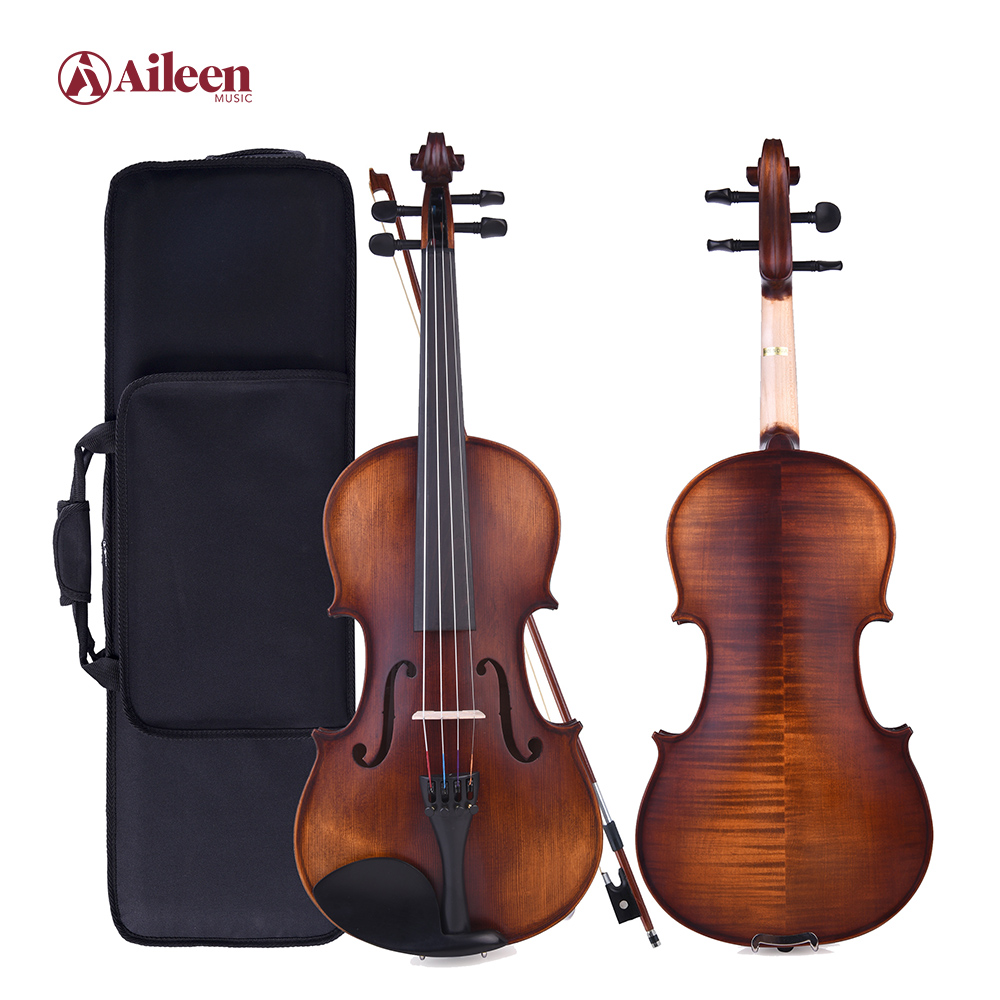
In high-grade intermediate and professional bowed strings (such as the VM100 and VM125 series), acoustic output is measured via FFT spectral soundboard monitoring. Adjusting soundpost placement, bridge curve radius, and string action height based on real-time overtone analysis ensures consistent project volume, fast bow response, and warmth across all four strings.
Future B2B Procurement Trends in Stringed Instruments
As global retail market dynamics shift, procurement directors and B2B buyers must align their supply chain strategies with emerging commercial and environmental trends. Key industry projections include:
1. Hybrid Acoustic-Electric & Active On-Board Processing
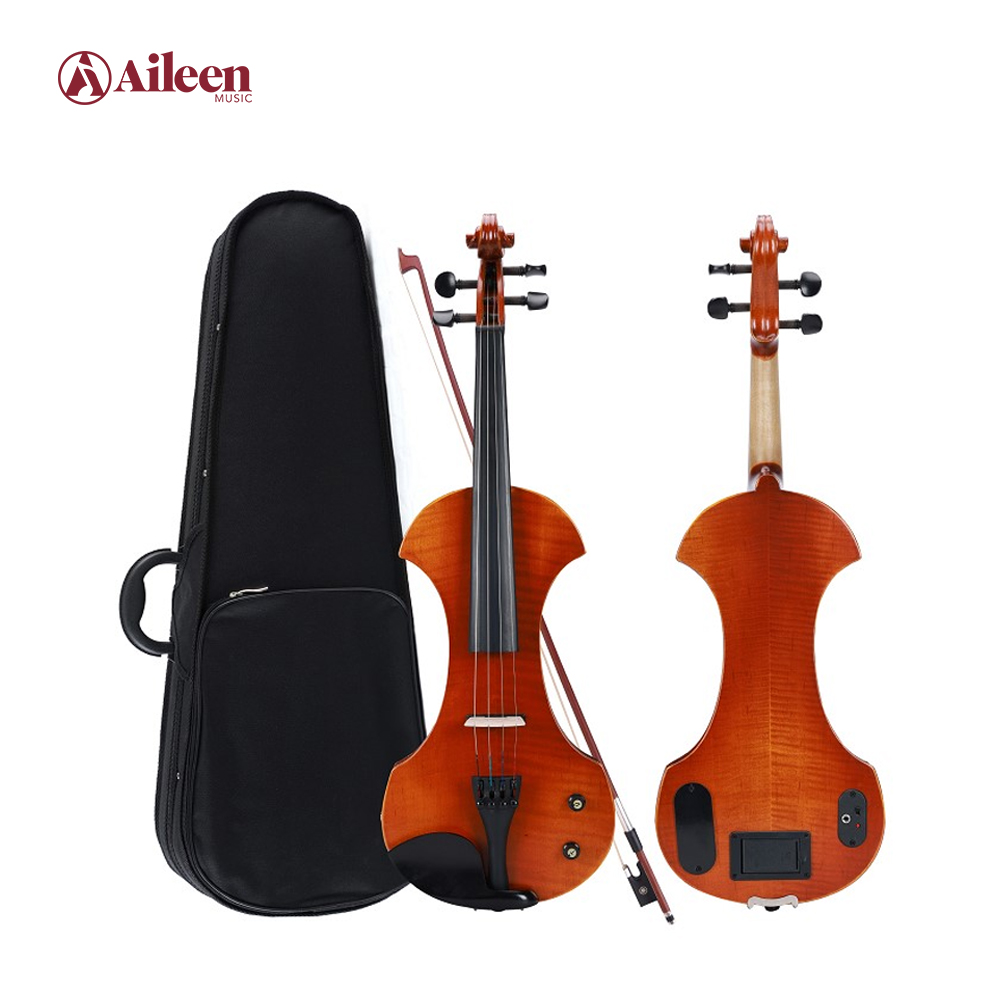
Demand for hybrid electric string instruments—such as active silent violins (e.g., AV-D501/AV-D502 with built-in reverb, delay, and headphone monitoring) and acoustic-electric guitars—is accelerating among urban musicians, modern stage performers, and home recording studios.
2. CITES Eco-Compliance & Alternative Composites
Tightening international regulations on endangered tropical hardwoods (such as genuine Ebony and Rosewood) have driven the adoption of high-density phenolic resin composites (Richlite), roasted maple fingerboards, and FSC-certified tonewoods without compromising structural durability or tactile feel.
3. Container Consolidation & Multi-Category Procurement
Rising overseas freight costs incentivize buyers to partner with single-source manufacturers capable of consolidating mixed orders—combining bowed strings, guitars, brasswind, and protective hard cases (such as Aileen Babylon series cases) in unified container loads to maximize logistics efficiency.
B2B String Instrument Specification Matrix
To assist procurement managers in establishing precise RFP (Request for Proposal) specifications, the following matrix outlines the material standards, craftsmanship benchmarks, and target markets across instrument tiers:
| Instrument Grade | Top Wood (Spruce) | Back/Rib Wood (Maple) | Fittings & Fingerboard | Varnish Type | Target B2B Channel |
|---|---|---|---|---|---|
| Student / Beginner | Solid Laminated or Press-Solid Spruce | Plain Solid / Light Flame Maple | Hardwood Ebony-Stained / Synthetic | High-Gloss Polyurethane | School District Rentals, Beginner Retail Kits |
| Intermediate / Advancing | Selected Seasoned Solid Spruce (3-5 Yrs) | Medium Flamed Natural Maple | Genuine Ebony / Boxwood Fittings | Hand-Rubbed Spirit Varnish | Music Academies, Retail Chains, E-commerce |
| Professional / Master | Acoustic-Grade Aged Spruce (8-15 Yrs) | Highly Flamed European Maple | Grade-A Ebony / Jujube / Tamarind | Antiqued Italian Oil Varnish | Specialty Violin Shops, Professional Luthiers |
Why Partner with Chive Music: Factory Advantages
Selecting the right OEM/ODM production partner in China requires verifying operational stability, manufacturing capacity, and export credentials. Chive Music Co., Ltd. offers clear structural advantages for global importers:
Comprehensive OEM/ODM Customization
Full support for private-label branding, custom headstock laser engraving, bespoke inlay patterns, custom body finishes, hardware finishes, and tailored retail packaging designed for instant distribution.
Rigorous 13-Step Factory Inspection
From initial timber drying room humidity readings to automated neck relief alignment, bridge carving, play-testing, and drop-testing export cartons, every instrument undergoes a strict 13-step inspection protocol prior to sealing.
Established Global Logistics Infrastructure
Located in Nanjing, Jiangsu, our logistics team coordinates sea freight, air freight express, and door-to-door DDP shipments with full customs clearance support, COO (Certificate of Origin) issuance, and compliance certification.
Frequently Asked Questions for Importers
Essential answers regarding minimum order quantities, private labeling, quality assurance, and international shipping logistics.
What is the typical Minimum Order Quantity (MOQ) for OEM string instrument orders?
MOQs vary depending on the instrument tier and customization requirements. Standard student violin outfits and beginner acoustic guitars generally start at 10–30 units per SKU. Intermediate and professional instruments, as well as specialized electric violins (e.g., AV-D502), can be ordered with lower MOQs (as low as 2–5 units). Mixed-product container orders are fully supported to accommodate diverse catalog inventories.
How does the factory prevent wood cracking during international shipping?
All tonewoods undergo a multi-stage kiln drying and natural seasoning process to achieve an Equilibrium Moisture Content (EMC) of 6%–8%. Furthermore, packaged instruments are vacuum-sealed with desiccant packs in climate-controlled export cartons to shield them from ambient humidity fluctuations during ocean transit across different climate zones.
Can we request private-label branding on instruments, accessories, and cases?
Yes. We offer comprehensive OEM services, including custom brand logo application via headstock silk-screening, laser engraving, internal soundboard label printing, custom accessory silk-screening, and bespoke outer hard-case badge molding.
Are materials compliant with international environmental laws (CITES, REACH, CPSIA)?
Absolutely. We strictly adhere to CITES regulations regarding wood species conservation. Where required, we utilize legal, certified timber or high-grade synthetic alternatives. Our finishes, lacquers, and metal hardware coatings comply with EU REACH standards and US CPSIA heavy metal safety thresholds.
What is the production lead time for full container orders?
Standard production lead times range from 30 to 45 days after sample approval and deposit confirmation. For stock items or "Ready to Ship" catalog selections, dispatch can occur within 7 to 14 business days.
Partner with a Leading Chinese String Instrument Manufacturer
Streamline your procurement supply chain with factory-direct pricing, certified lutherie craftsmanship, and full OEM/ODM customization. Contact our international export department today to receive a comprehensive wholesale catalog and quotation.
Contact Us