Featured Instruments & Essential Components for Santiago Importers
Explore our export-grade fretted platforms, orchestral strings, brasswind, and tuning accessories engineered with precision CNC routing and kiln-dried stabilization to excel in the Dominican climate.
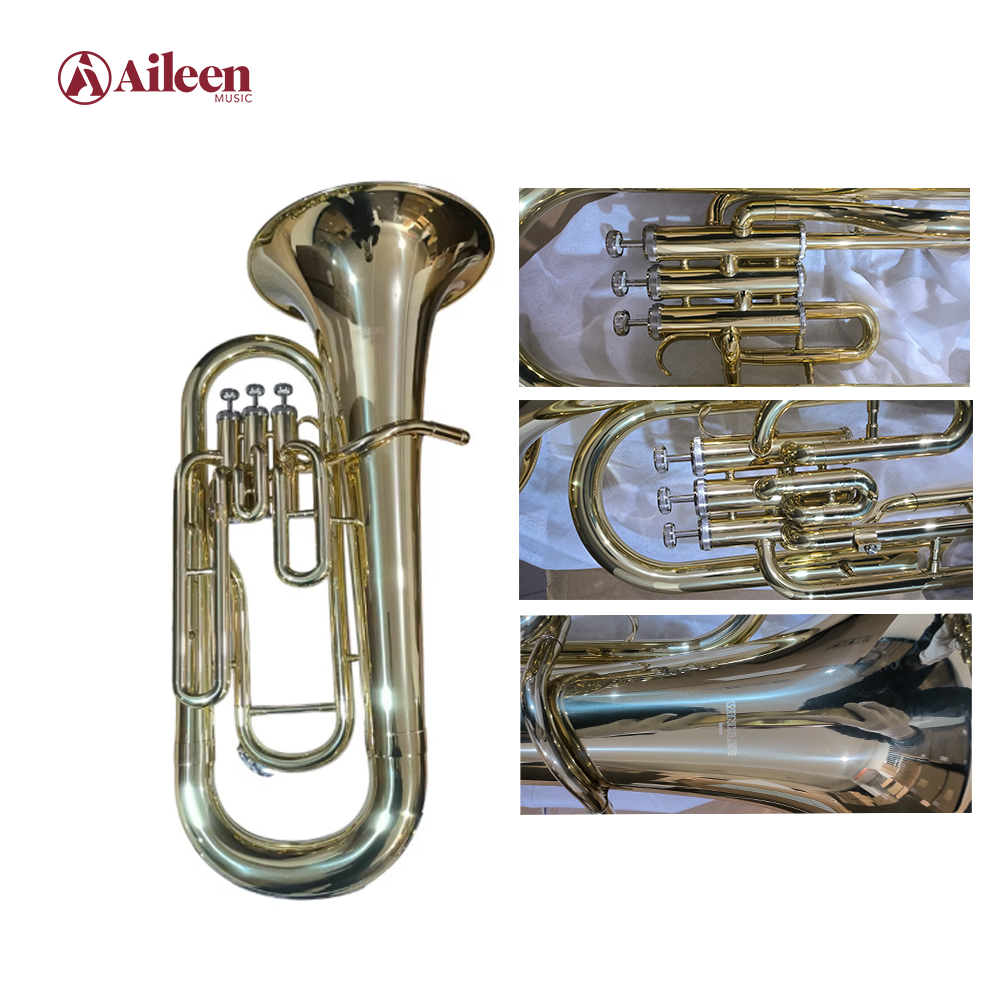
EU-G3400G Entry Level Student Yellow Brass Euphonium
Equipped with durable yellow brass tubing and high-density foam case protection, specifically engineered for academy marching ensembles across the Cibao region.
View Specifications →
WMT-500A Clip-On 3-in-1 Digital Chromatic Tuner
Piezo-vibration sensing metronome-tuner compatible with Bachata acoustic guitars, classical nylon strings, and electric basses in noisy live gig settings.
View Specifications →
TR5200 Professional Yellow Brass Body Trumpet
Monel piston valves and calibrated bore design delivering crisp projection for Dominican Merengue horn sections and classical conservatory training.
View Specifications →
VH500Z-A 4/4 Hand Made Baroque Conservatory Violin
Individually carved solid spruce top and flamed maple back with historic Baroque neck specifications, ideal for advanced chamber repertoires.
View Specifications →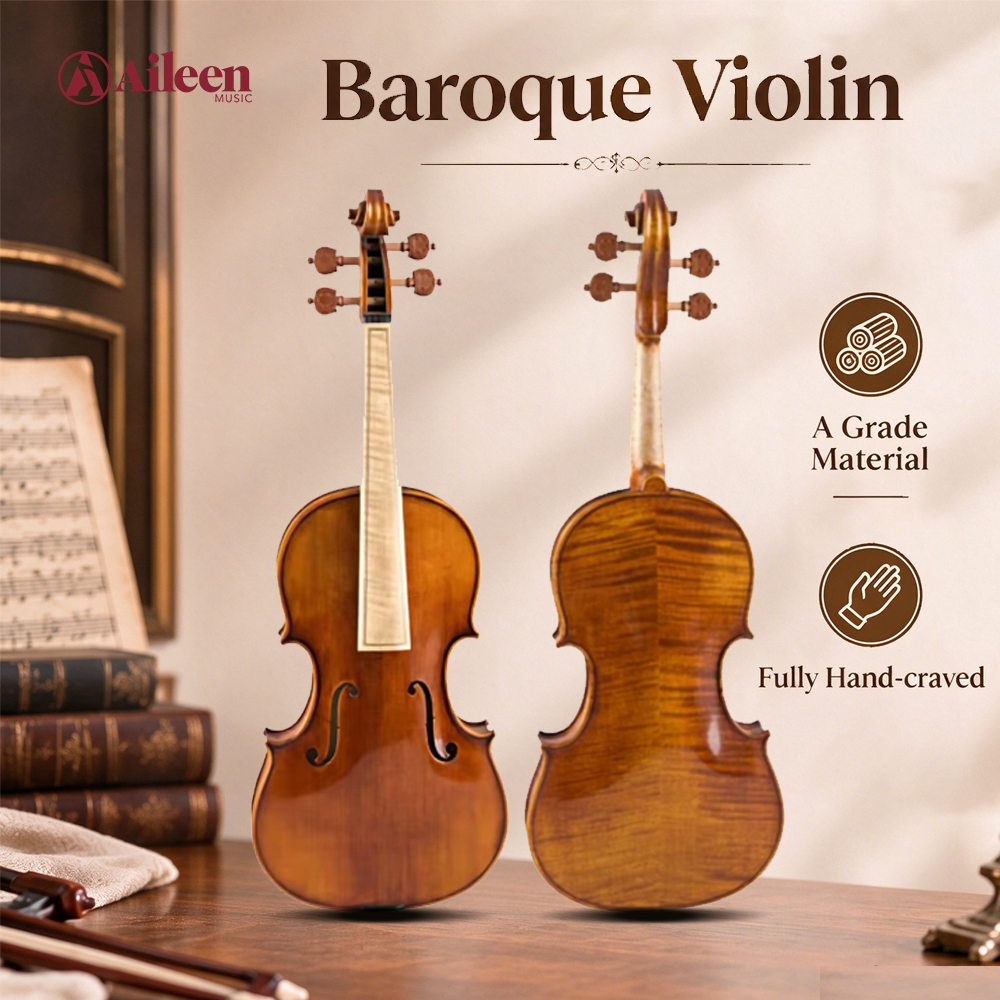
VH550Z-A Universal 4/4 Baroque Violin
Competitive institutional pricing for conservatory string departments, featuring aged tonewoods that resist seasonal tropical humidity shifts.
View Specifications →
B3412 Diatonic Button Accordion (34 Button / 12 Bass)
The signature instrument for Dominican Merengue Típico. Features responsive reeds, airtight bellows, and reinforced internal timber frames.
View Specifications →
CSV1079A Babylon Deluxe Wooden Triangle Violin Case
Multi-ply wooden shell offering structural impact resistance and thermal-hygrometric isolation during transit through Caribbean regional distribution routes.
View Specifications →
LC02 Legacy Series Selected Solid Spruce Top Cello
Hand-graduated solid spruce soundboard with maple back and ribs. Sized 1/8 to 4/4 to furnish symphony education initiatives throughout the Cibao province.
View Specifications →Strategic Evaluation: Guitar Body Manufacturing for the Santiago de los Caballeros Market
As the commercial capital of the Cibao Valley and the second largest metropolitan area in the Dominican Republic, Santiago de los Caballeros commands a unique position in the Caribbean musical instrument supply chain. Renowned globally as the birthplace of Merengue Típico and a bustling epicenter for Bachata guitar performance, the region hosts an extensive ecosystem of independent luthiers, custom repair shops, and commercial music retailers along Calle El Sol and surrounding commercial arteries. However, the domestic production of solid wood guitar bodies, chambered electric blanks, and acoustic soundboxes in Santiago faces systemic supply-side constraints: domestic timber seasoning infrastructure is scarce, specialized automated CNC machinery is cost-prohibitive for small workshops, and the persistent Caribbean relative humidity (frequently exceeding 75% to 85%) leads to warp and glue-line failure if wood blanks are improperly prepared.
For music store owners, luthier cooperatives, and educational procurement managers in Santiago, establishing a direct OEM/ODM relationship with tier-one Chinese guitar manufacturing facilities resolves these structural challenges. Chinese guitar body production has evolved far beyond rudimentary assembly line fabrication; modern facilities leverage computer-controlled drying kilns, five-axis CNC contour machining, vacuum-impregnated pore sealing, and rigorous wood equilibrium moisture content (EMC) testing. By acquiring pre-routed, precision-machined, and climate-stabilized guitar bodies and fretted platforms from China, Santiago buyers can concentrate their resources on value-added custom finishing, fretting, pickup winding, and final luthier setups, drastically lowering their per-unit manufacturing cost while guaranteeing dimensional reliability.
Cost Optimization & Margin Gains
By bypassing multiple tiers of North American and European middle-tier distributors, Santiago importers eliminate 30% to 45% in margin markups. Sourcing direct from China enables CIF delivery into Caucedo or Haina with container consolidation advantages.
CNC Dimensional Precision
Electric and acoustic guitar bodies feature computer-calibrated neck pockets (tolerance within ±0.05mm), precise bridge placement, and pickup routing tailored for standard ST, TL, LP, and modern multi-string designs favored by contemporary musicians.
Climate-Engineered Tonewoods
Raw tonewood stocks (Mahogany, Alder, Ash, Basswood, and Flamed Maple) undergo automated kiln seasoning down to 8%–10% moisture content, coupled with thermo-treating (torrefaction) to prevent body warping under tropical Santiago humidity.
Moreover, the strategic value proposition extends beyond raw electric guitar bodies. The Dominican musical marketplace demands robust, high-resonance acoustic platforms that can project through the polyrhythmic density of traditional percussion instruments like the güira and tambora. Chinese OEM manufacturers provide specialized tops, bracing structures, and full cutaway acoustic bodies tuned for Bachata requinto leads and rhythmic accompaniment. Simultaneously, importing enterprises can consolidate fretted instrument bodies with related acoustic categories—including diatonic button accordions, orchestral brass, and student violins—maximizing freight volume efficiency inside standard 20ft or 40ft shipping containers.
Localized Application Scenarios in the Santiago & Cibao Regional Markets
Understanding the micro-economic realities of Santiago de los Caballeros is fundamental to achieving high commercial turnaround. Equipment purchased from China serves distinct local applications across three primary market segments:
1. Commercial Luthier Workshops and Repair Ateliers: Santiago maintains a tradition of artisan guitar makers who assemble, lacquer, and voice instruments for regional Bachata touring bands and live resort performers in nearby Puerto Plata and Sosúa. For these workshops, sourcing raw, unfinished bodies in selected African Mahogany, Basswood, or Canadian Maple allows luthiers to apply custom nitrocellulose or polyurethane finishes locally, fit customized pickup harnesses, and offer high-end instruments under their own private workshop labels at half the cost of imported American models.
2. Music Academies and Regional Conservatories: Educational institutions throughout the Cibao province—including local municipal youth orchestras, church institutions, and independent music schools—operate under rigid budgetary limits. Procurement managers cannot afford fragile, unseasoned instruments that crack during the seasonal Dominican summer heat. Supplying certified student-grade violins, cellos, entry-level brasswinds, and ergonomic student classical guitar bodies from an ISO 9001 certified Chinese factory ensures durability, tuning stability, and uniform batch specifications across multiple semester intakes.
3. High-Volume Retail Distribution along Calle El Sol: Commercial music dealerships catering to amateur hobbyists, church worship teams, and working musicians require diverse price-point stratification. By leveraging low minimum order quantities (MOQs) from 1 to 10 pieces on select electric guitar models, 5-string basses, and percussion kits, Santiago dealers can maintain dynamic retail showroom displays without trapping excessive working capital in slow-moving inventory.
Why Santiago Importers Partner with Our Manufacturing Infrastructure
For over three decades since our establishment in 1993, our organization (Chive Music / Aileen Music) has served as an OEM/ODM manufacturing engine for musical instrument distributors worldwide. Our 79-person dedicated team in Nanjing, Jiangsu, oversees an integrated manufacturing system covering every facet of tonewood milling, neck carving, multi-stage lacquering, hardware assembly, and final acoustic inspection.
Established in 1993
Over 30 years of continuous global export history. Ranked No. 195 in the prestigious Music Trades Global 225 and honored as an AAA Grade Credit Enterprise by the China Musical Instrument Association.
Patented Innovations
Holders of 8 technical design patents and 5 registered proprietary trademarks (including Winzz, Lexington, and Chive), proving continuous R&D commitment and advanced engineering leadership.
ISO 9001 & Bureau Veritas Verified
Our quality management framework is audited and certified by BV, SGS, and TÜV. Every single guitar body and instrument undergoes play-testing, neck relief calibration, and finish inspection prior to boxing.
One-Stop Container Consolidation
Unlike specialized single-instrument factories, our multi-category manufacturing capability allows Santiago buyers to combine electric guitar bodies, violins, accordions, brass, and cases in a single Bill of Lading.
Frequently Asked Questions: Sourcing Guitar Bodies & Musical Instruments from China to Santiago
Detailed operational guidance addressing logistical, regulatory, and quality requirements for Dominican Republic importers.
What is the recommended wood specification to prevent cracking in Santiago's tropical humidity?
We recommend tonewoods that have undergone precision kiln-drying down to 8%–10% moisture content followed by thermal stabilization (torrefaction). For solid electric bodies, Basswood, Alder, and seasoned Mahogany sealed with thin poly base coats provide superior resistance to expansion and glue-seam swelling compared to unfinished open-grain woods.
How are shipments handled from Chinese ports to Santiago de los Caballeros?
Shipments depart major Chinese maritime hubs (such as Shanghai, Ningbo, or Shenzhen) with direct or transshipment routes into the Port of Caucedo (DP World) or the Port of Rio Haina near Santo Domingo. From the maritime terminal, customs-cleared cargo moves via container transport along the Autopista Duarte directly to commercial warehouses in Santiago within 2 to 4 hours of release.
Can we order custom OEM guitar bodies with proprietary routing and custom branding?
Yes. We offer complete OEM and ODM engineering. Santiago clients can provide CAD files, digital blueprints, or physical master samples. We accommodate custom neck-pocket depths, proprietary tremolo cavity routing, custom control cavities, private laser-engraved neck plates, and custom packaging designs.
What are the Minimum Order Quantities (MOQs) for mixed trial shipments?
Our flexible manufacturing structure supports growing enterprises. Standard guitar bodies and finished electric guitars start from as few as 2 to 6 pieces per specification. Orchestral violins start at 2 to 8 pieces, and percussion instruments at 1 to 2 sets. This allows Santiago retailers to consolidate a diverse 20ft container across multiple product categories.
How does Chive Music guarantee quality compliance prior to container loading?
Our quality assurance workflow covers a documented 13-stage manufacturing process. From raw wood sawing, CNC contour carving, and automated dust-free lacquering to neck pocket micrometer checks and play-testing setup, every instrument is logged. Importers are also fully supported should they wish to commission independent third-party inspections (e.g., SGS, Intertek, or BV) at our factory prior to final balance payment.