Featured Export Instruments for Samoa & Pacific Buyers
Engineered for sonic resonance, climate durability, and consistent performance across tropical high-humidity environments. Consolidate full-container (FCL) or palletized less-than-container (LCL) shipments bound for the Port of Apia (Matautu Wharf).
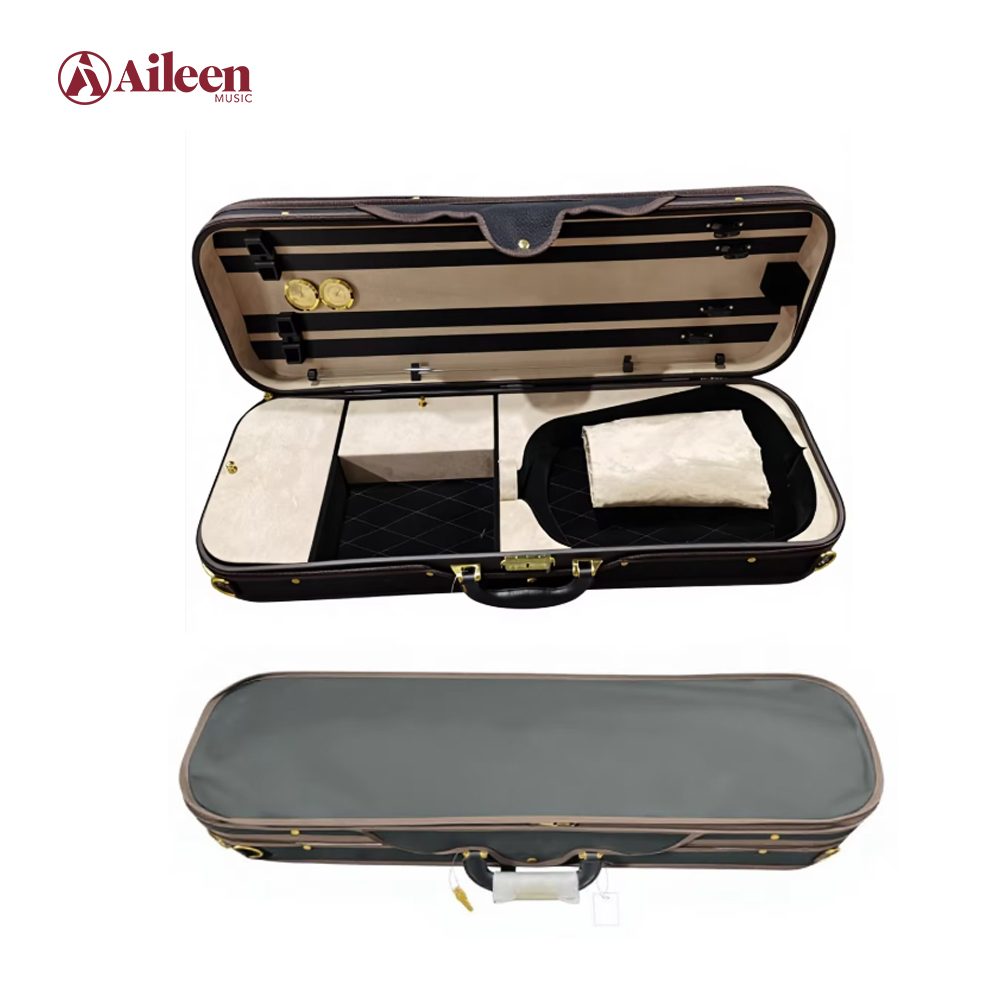
Deluxe Oblong Wooden Violin Case
Multi-ply arched wooden shell with hygrometer, waterproof cordura exterior, and reinforced latches resisting tropical moisture penetration.
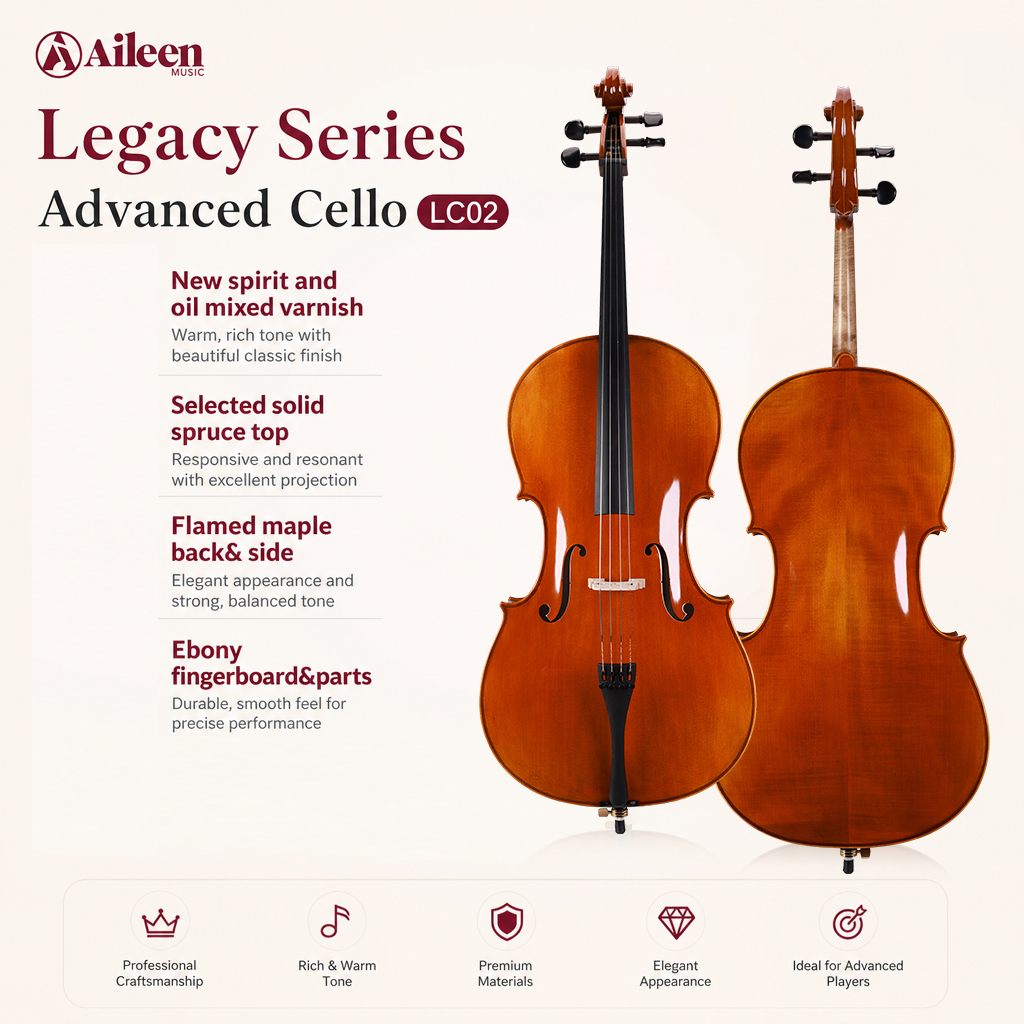
LC02 Legacy Solid Spruce Cello (1/8-4/4)
Hand-carved resonant spruce soundboard with naturally flamed maple back and aged ebony pegs. Stabilized timber resists warpage during ocean transit.
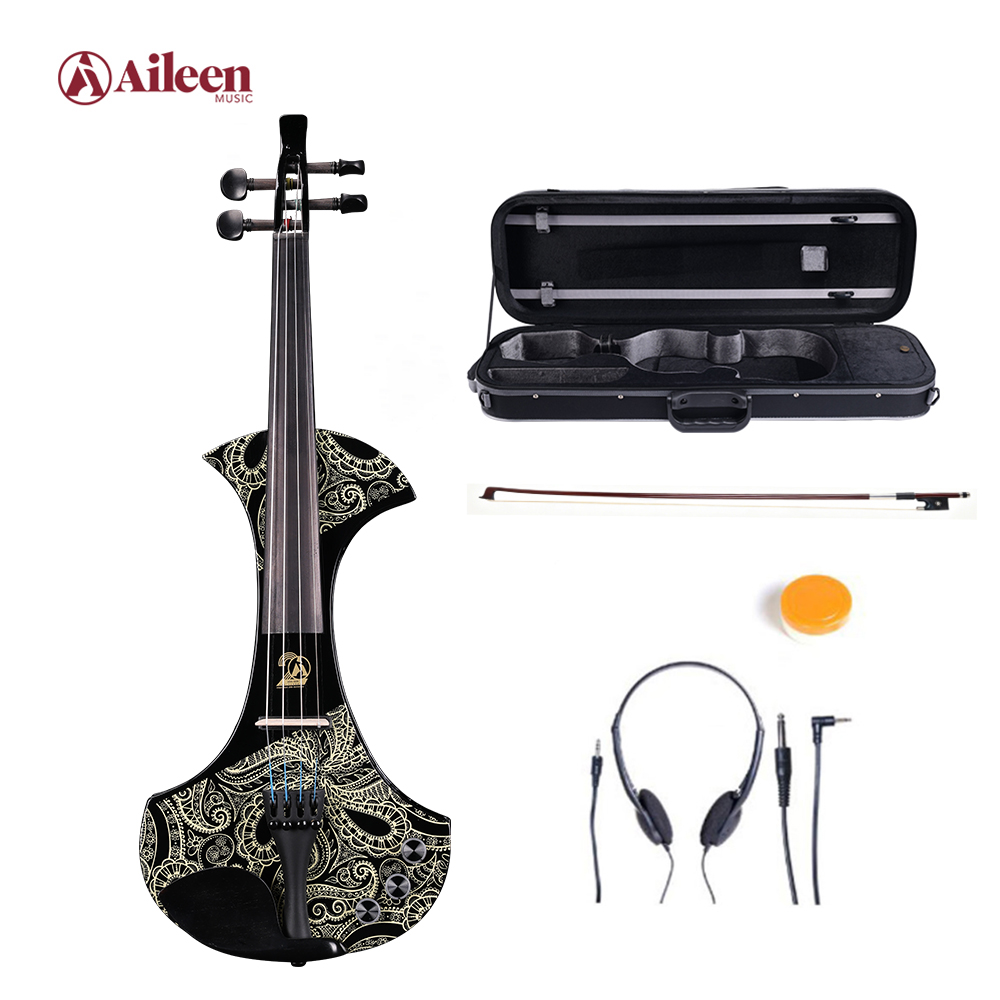
AV-D501 Electric Violin (Reverb/Delay/Chorus)
Patented active circuitry featuring integrated DSP spatial effects, silent practice headphone output, and balanced stage DI output for Pacific live halls.

Professional Yellow Brass Bb Trumpet
Monel corrosion-resistant valves, double-baked lacquer, and accurate intonation for church brass ensembles, school bands, and civic parades.

40" Cutaway Folk Acoustic Guitar
Laminated linden body with high-density engineered bridge, sealed gear tuners, and comfort fretboard radius for school curricula and beginner programs.
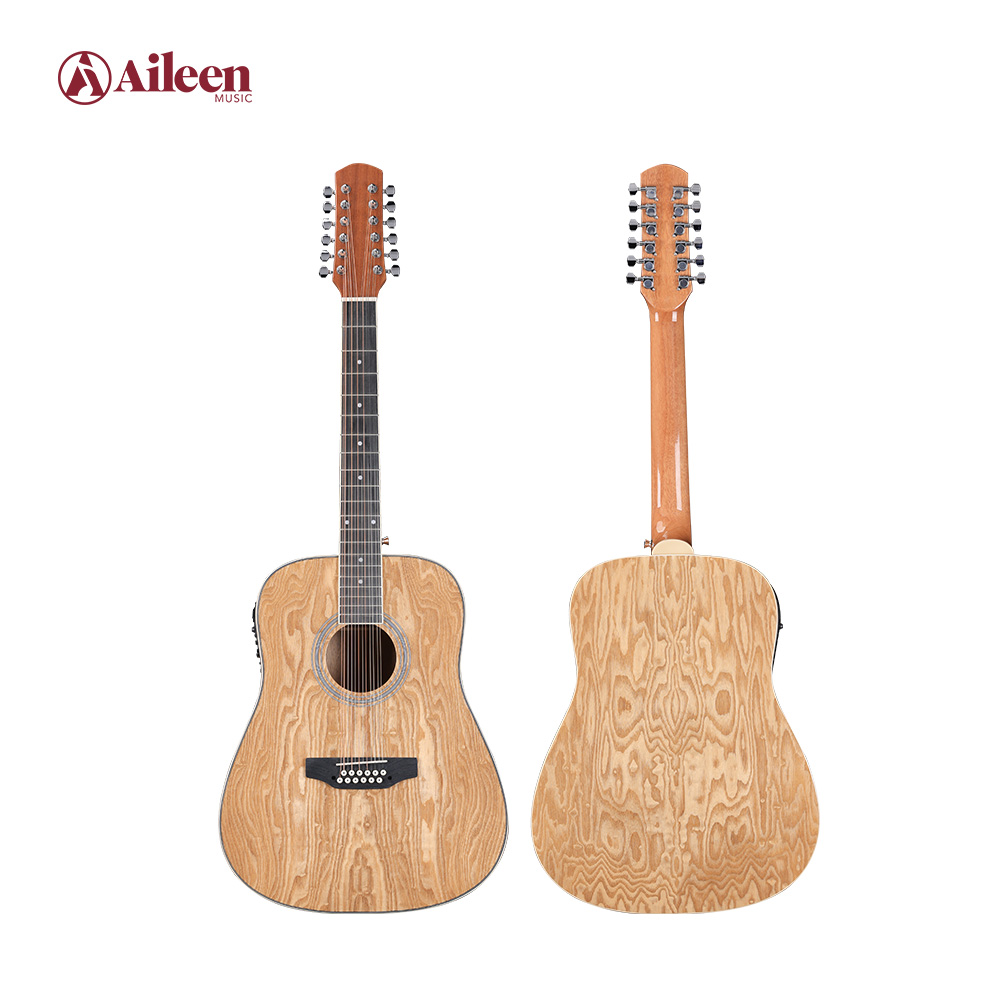
AF55E-12 Quilted Ash 12-String Folk Guitar
Reinforced dual-rod neck structure counterbalancing high string tension. Produces the shimmering chorus resonance sought by Samoan choral backing bands.

AFH420 42-Inch All-Solid Jumbo Guitar
Solid Sitka spruce soundboard with solid mahogany back/sides. Delivers deep, projection-heavy acoustic bass essential for non-amplified open-air community gatherings.
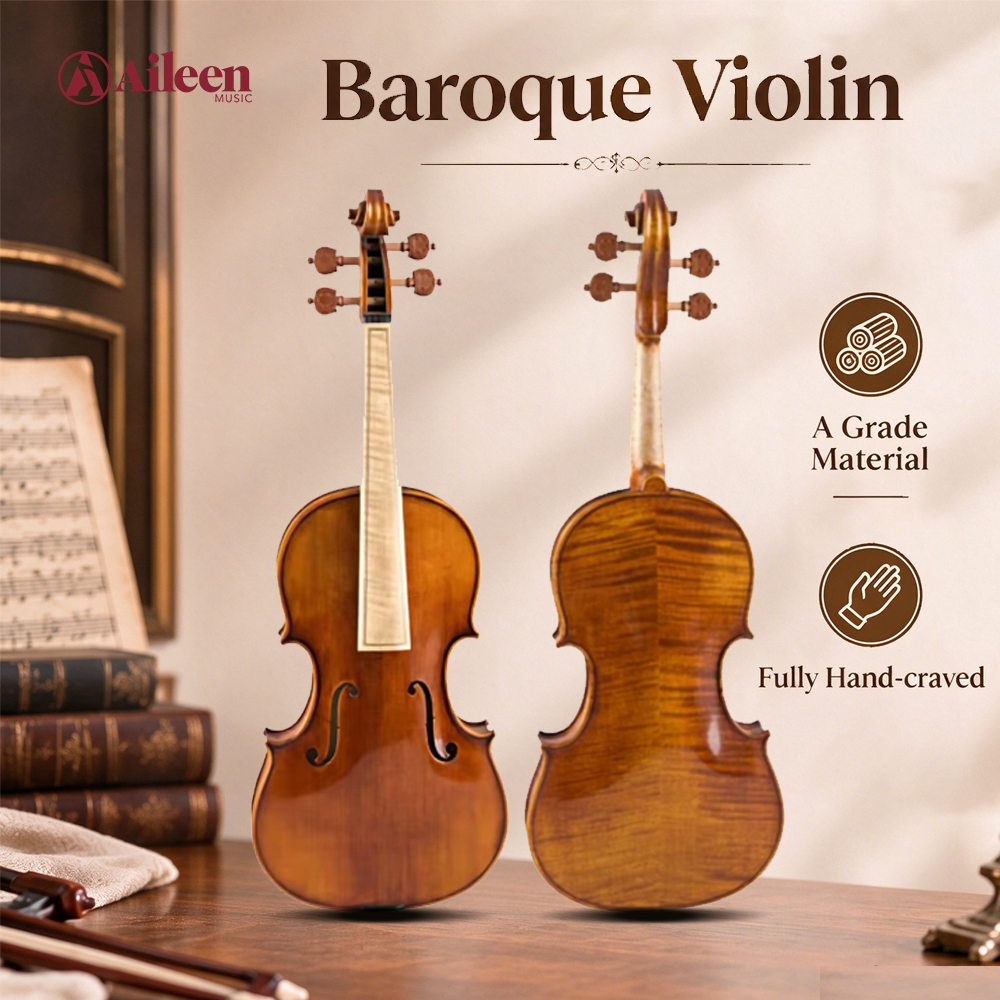
VH550Z-A Universal 4/4 Baroque Violin
Period-accurate neck angle and traditional gut-core friendly setup, tailored for European classical repertoire, liturgical recitals, and master violin workshops.
Engineering Electric & Acoustic Guitars for Samoa's Coastal Marine Climate
Apia's equatorial maritime atmosphere presents extreme operational hurdles for standard stringed musical instruments. With relative humidity (RH) consistently exceeding 80% and airborne marine salts carried inland by Pacific trade winds, commercial importers require factory-level stabilization rather than standard temperate-zone construction.
Torrefied / Roasted Wood Necks
Our electric guitar necks undergo controlled oxygen-free vacuum baking at 180°C to 210°C. This torrefaction process permanently breaks down the timber's hydroxyl groups, rendering the cellular structure hydrophobic. When deployed in Upolu's humidity, our roasted maple necks exhibit near-zero hygroscopic dimensional shifts, preventing fret sprout and eliminating seasonal neck warping.
Dielectric Hermetic Electronics
Pacific coastal humidity quickly degrades standard potentiometers and toggle switches, inducing crackle and signal dropout. Our factory equips Apia-designated export batches with fully sealed alpha-spec potentiometers, double-dip wax-potted Alnico pickups, and conductive copper/carbon cavity shielding that forms a closed Faraday cage against tropical electromagnetic interference.
Marine-Grade Alloy Hardware
Atmospheric sodium chloride in Apia accelerates electrolytic pitting on bridges, saddles, and machine heads. We replace zinc-heavy diecastings with stainless steel saddle screws, high-grade electroplated chrome over solid brass, and 18:1 sealed lubrication machine heads that resist salt-fog corrosion across years of island gigging.
Standard acoustic and electric guitars manufactured for continental European or North American domestic markets are stabilized to an equilibrium moisture content (EMC) of 8% to 10%. Importing such instruments directly into Samoa results in violent wood expansion, swelling tops, glued seam separation, and bowed fretboards. Our OEM export lines for Pacific distributors are kiln-cured under proprietary schedules to 11%–13% target moisture equilibrium, pre-stabilizing the tonewood for tropical delivery.
| Component Specification | Standard Commercial Factory Guitar | Chive Music Apia-Export Tropicalized Build | Practical Advantage for Samoan Retailers |
|---|---|---|---|
| Neck Construction | Plain sawn untreated hard rock maple | Quarter-sawn Roasted Maple or Carbon Fiber Reinforcement | Zero neck twist; eliminates warranty returns caused by wet-season humidity spikes. |
| Truss Rod System | Single-action compressive rod | Two-way dual-action titanium alloy rod | Bi-directional relief adjustments for fine action regulation in equatorial climates. |
| Fretwire Material | 18% Nickel-Silver alloy | Hardened Stainless Steel or Cryogenic Nickel | Immune to green salt-air oxidation; retains mirror crown polish indefinitely. |
| Body Polymeric Finish | Thick unbaked polyester | Thin-skin cross-linked polyurethane or micro-cured lacquer | Maintains acoustic resonance without blistering or clouding under coastal sun exposure. |
| Pickup Potting | Single paraffin dunk | Vacuum pressure dual beeswax-paraffin blend | Zero microphonics during loud open-air worship amplification; seals coil wire from oxidation. |
Localized Application Scenarios Across the Samoan Archipelago
Music is the living bedrock of Fa'a Samoa (The Samoan Way). From weekly congregational praise in sprawling coastal churches to Apia's vibrant hospitality and resort live music circuit, our instruments fulfill demanding daily performance schedules across Upolu and Savai'i.
Church Congregations & Choral Ensembles
Churches—including the Congregational Christian Church of Samoa (EFKS), Catholic, Methodist, and LDS assemblies—represent the largest single institutional procurers of musical instruments in Apia. Choral services demand robust electric bass guitars with defined low-end clarity, 12-string acoustics for layered liturgical backing, and durable brass horns that can handle daily rehearsal schedules without structural fatigue.
Polynesian Reggae, Island Pop & Tour Stages
Apia's live music scene is celebrated for syncopated Polynesian reggae, string-band folk, and modern contemporary island pop. Electric guitars with expressive clean headrooms, warm Alnico V single-coils for rhythmic chops, and dynamic punchy humbuckers provide local artists the exact tonal authority required for live waterfront venues, corporate events, and regional music festivals.
Resort Hospitality & Open-Air Cultural Shows
Tourism properties stretching from Apia Harbor out to the beaches of Aleipata require permanent instrument backlines for cultural Fiafia nights, evening acoustic lounge sets, and poolside performances. These instruments operate within meters of breaking ocean surf, requiring robust weather seals, closed machine heads, and stable laminated soundboards that never crack under sun and humidity.
Apia Musical Instrument Market Dynamics & Import Trends
Understanding the macro-economic and trade mechanics governing the supply of musical equipment into Samoa. Direct factory sourcing replaces obsolete secondary importation channels, lowering landed unit costs and ensuring reliable product consistency.
Shift Away from Gray-Market Used Imports
Historically, Apia retailers and private buyers relied heavily on unstandardized secondhand instruments imported informally via personal luggage or second-hand shipping containers from New Zealand and Australia. The Samoan market is undergoing a structural transition toward verified, factory-backed new stock that offers warranties, standardized spare parts, and pristine cosmetics at equivalent landed price points.
Digital Amplification & Silent Stage Integration
Churches and modern community halls throughout Apia are modernizing their acoustic profiles. Worship spaces are adopting in-ear monitors (IEMs) and digital modeling processors. This shift creates sharp regional demand for electric guitars, active basses, and patented electric violins (such as our AV-D501) that plug directly into digital audio workstations and stage boxes with zero acoustic microphone bleed.
Youth Education & Ministry Fleet Procurement
School music programs, vocational colleges, and denominational youth fellowships across Samoa are prioritizing structured music education. Institutional purchasers favor bundled entry kits (acoustic guitar, gig bag, strap, tuner) and standardized orchestral violins (1/16 to 4/4 size) that allow bulk fleet management, modular part replacements, and long service lifetimes.
All factory consignments designated for Apia are packed in heavy-duty 5-ply fluted export cartons with interior dessicant bags and vapor-barrier wrapping to prevent mold accumulation during the 20-30 day maritime voyage. Musical instruments fall under Samoa Customs Tariff headings HS 9202 (other string musical instruments) and HS 9207 (musical instruments whose sound is produced, or must be amplified, electrically). Our export documentation specialists supply precise commercial invoices, packing lists, and Certificates of Origin to streamline customs clearance and Value Added Goods and Services Tax (VAGST) declarations at the Port of Apia.
Why Direct Importers Partner with Chive Music
Since our establishment in 1993, Chive Music Co., Ltd. has delivered factory-direct manufacturing solutions to distributors, educational programs, and musical brands across more than 100 global territories. We provide the manufacturing rigor of a Tier-1 supplier backed by international trade compliance.
Ranked #195 Worldwide
Recognized in the prestigious Music Trades Global 225 music products suppliers ranking (2017), validating our industrial scale, supply stability, and commercial integrity.
Permanent NAMM Member
Permanent NAMM Show USA member since 2003 and active CCPIT member since 2005. Dedicated to ethical labor practices and rigorous global quality benchmarks.
Triple-Audit Certification
Fully certified under ISO 9001 Quality Management standards, with on-site factory manufacturing audits executed by Bureau Veritas, SGS, and TÜV Rheinland.
Single-Container Consolidation
Consolidate electric guitars, acoustic guitars, student violins, trumpets, marching toms, and hardshell cases inside a single factory-loaded container to slash ocean freight overhead.
End-to-End Controlled Production Pipeline
Every instrument departing our facility passes through a synchronized 13-stage manufacturing and inspection protocol: Tonewood Seasoning & Rough Machining > CNC Precision Milling > Multi-Coat Electrostatic Spray Finishing > Cured Thermal Drying > Fretwork Leveling & Dressing > Electronics Potting & Wiring > Acoustic Assembly > Professional Setup (Action, Relief, Intonation) > Multi-Point Visual QC > Play-Testing > Vacuum Dessication > Fluted Export Packaging > Containerized Loading.
Zero Defect Tolerance Full Traceability Per BatchApia Importers & Wholesalers FAQ
Practical commercial answers regarding minimum order quantities, Pacific maritime freight lead times, private label branding, and climate warranties.
Q1. What is the Minimum Order Quantity (MOQ) for shipping to Apia?
We offer flexible order quantities tailored to regional island distributors. Selected electric guitars and basses start at just 2 to 6 pieces per specification. Importers can combine acoustic guitars, electric violins, brass horns, and cases into a consolidated mixed-product order to reach full container (20GP/40HQ) economies of scale or standard LCL maritime pallets.
Q2. How do you prevent mold and rust during ocean transit to Samoa?
Ocean transit to the Port of Apia frequently crosses high-humidity equatorial waters. We enclose each instrument in micro-perforated vapor-barrier polythene with pharmaceutical-grade silica gel desiccant packs. Metal components are lightly passivated, and all outer cartons feature double-wall corrugated 5-ply construction to prevent carton crush in marine holds.
Q3. Can we brand electric guitars with our local Samoan store or church logo?
Yes. We specialize in comprehensive OEM/ODM customization. We can apply your custom brand identity via laser-cut pearl headstock inlays, silkscreen metallic printing, custom neck plate engraving, personalized interior soundhole labels, and branded cartons. Sample validation is completed before full production commences.
Q4. Do your instruments comply with international CITES wood regulations?
Fully. We adhere strictly to CITES Appendix II regulations regarding rosewoods and protected timber species. For our international export models, we utilize certified legal tonewoods, premium thermo-treated (roasted) maple, technical ebony, and ethically sourced alternatives that clear international port inspections without delay or confiscation.
Q5. What is the transit lead time from your factory to the Port of Apia?
Standard factory production typically takes 30 to 45 business days depending on the customization depth. Maritime container routing from Ningbo or Shanghai port to Matautu Wharf in Apia generally takes 22 to 32 sailing days, depending on shipping line schedules (e.g., transshipments via Suva, Fiji or Auckland, New Zealand).
Q6. How are warranty claims and replacement components handled in Samoa?
We provide comprehensive factory warranties covering structural tonewood integrity, neck straightness, and electronic operability. For volume container shipments, we supply a complimentary buffer of critical wear-and-tear replacement hardware—including extra potentiometers, jacks, saddles, machine heads, and bridge pins—so your store can service local clients immediately.